
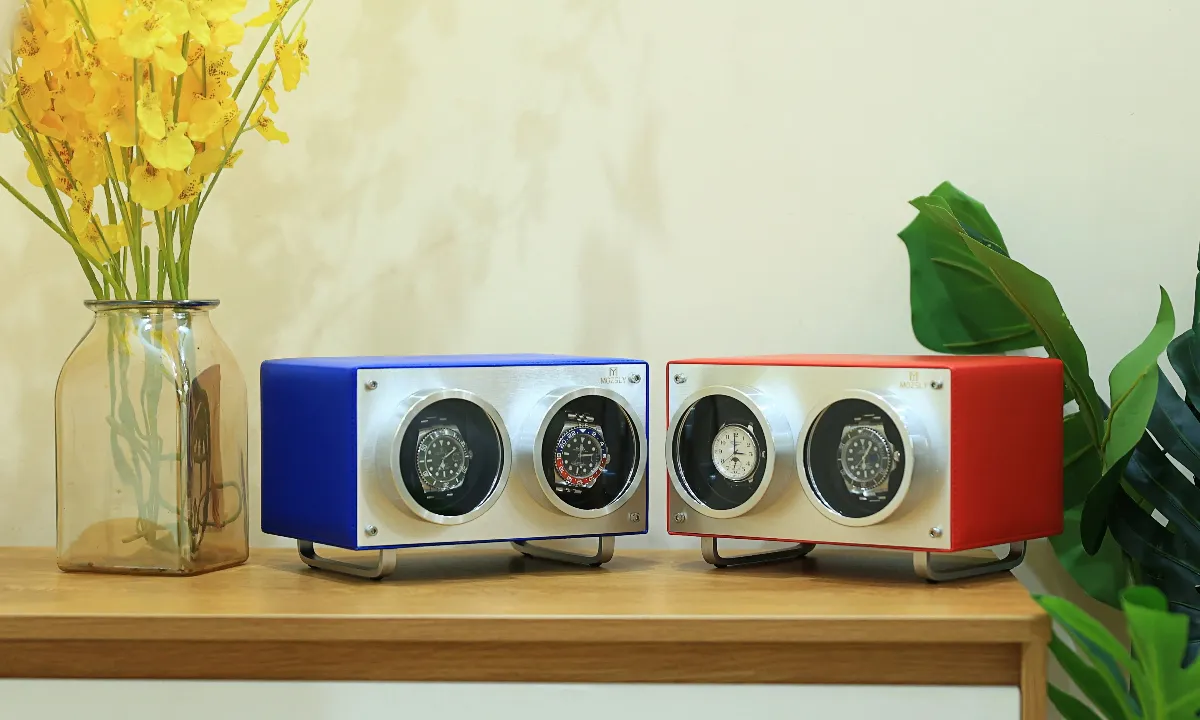
Share This Post
Owning a Rolex means you care about precision, comfort, and reliability. But if you rotate between watches or store your Rolex in a safe, it can be frustrating to find it stopped, the time wrong, and the date out of sync.
This guide gives you clear, practical Rolex watch winder settings so you can stop guessing.
You will learn how many turns per day (Rolex TPD) your watch really needs, which rotation direction to choose, how to pick the best watch winder for Rolex, and when it is better to leave your watch unwound.

Rolex Watch
Whether your watch is on your wrist, in a box, or on an automatic watch winder, you will know exactly what to do to keep it running smoothly.
From manual winding and basic setup to troubleshooting and storage tips, each section is short and easy to scan, so you can quickly find the answer you need.
Understanding Rolex Watches and Watch Winders
A Rolex is a mechanical watch built with a precise automatic movement. Most modern Rolex models are self‑winding. They wind themselves as you move your wrist throughout the day.
When you stop wearing the watch for a couple of days, the power reserve runs out, and the watch stops. This is normal and does not damage the watch, but it means you must reset the time and date.
A watch winder (also called a Rolex rotating box or self-winding box) is designed to copy the gentle motion of your wrist. It keeps the rotor moving and the mainspring partly wound.
When set with the correct Rolex watch winder settings, it can:
- Keep the time and date running
- Reduce how often you need to reset the watch
- Make it easier to store the watch in a safe or cabinet.
Many people also ask, “What is a watch winder and what do watch winders do?” In simple words, a watch winder is a motorized box that slowly turns your watch in one or both directions. It does not speed up the watch or overpower it if the TPD for Rolex stays within a normal range.
When you understand how automatic Rolex movements work and what a winder actually does, it becomes much easier to decide which watch winder for Rolex to buy and how to set it. Next, we will look at how to wind and set your watch by hand before you use any winder.
How to Wind and Set a Rolex Watch
Before you adjust any Rolex watch winder settings, you should know how to wind and set the watch by hand. This answers many common questions, such as how to wind a Rolex, a Rolex Datejust, and a Rolex watch.
Manual Winding and Setting a Rolex
If your Rolex has stopped, start with a manual wind. This works for most models, including Rolex Datejust, Rolex Submariner, Rolex GMT‑Master II, and Oyster Perpetual.
Follow these steps:
- Unscrew the crown gently.
- Turn it clockwise about 30–40 times. This builds up the power reserve.
- Set the time and, if your model has it, the date.
- Push the crown back in and screw it down to keep the case water‑resistant.
Many people worry, “Can you overwind a Rolex?” You cannot overwind a modern Rolex by turning the crown in this normal range. The movement has a slip clutch that protects the mainspring.
After a correct manual wind, you can wear the watch or place it on an auto watch winder for Rolex. The rotor will then keep the watch running as long as it gets enough movement.
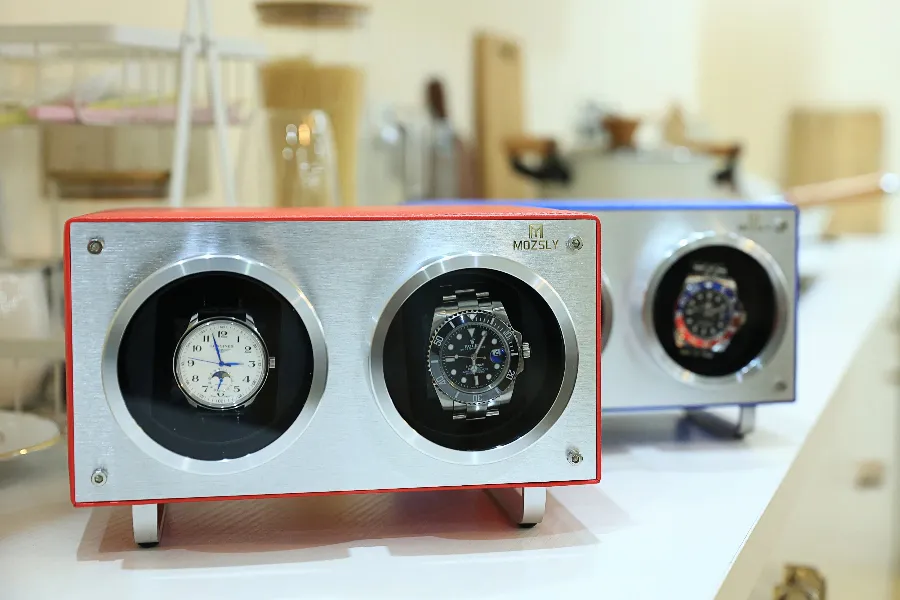
Watch Winder
Basic Rolex Watch Winder Settings (TPD and Direction)
Once your watch is set and running, you can move to the watch winder settings for Rolex.
For daily use on a winder, two key factors matter most:
- Turns per day (TPD)
- Rotation direction
Most modern Rolex automatic movements do well with about 650–800 TPD. This recommended TPD range for Rolex keeps the mainspring comfortably wound without excessive motion.
If your automatic watch winder only offers 900 TPD as the closest level, that is still generally safe for a healthy movement, as long as:
- The winder uses intermittent cycles with rest periods
- The watch is not spinning nonstop 24 hours a day.
Most Rolex calibers are bi‑directional. They wind when the rotor swings both clockwise and counterclockwise. Because of this, the best setting for a Rolex watch winder is usually an alternating mode (clockwise and counterclockwise).
If your winder offers several programs, choose an alternating mode in the 650–800 TPD range as your starting point. Then see if the watch stays fully wound.
You can use this table as a quick reference for standard models such as the Rolex Datejust TPD and the Rolex Submariner TPD:
|
Model / Group
|
Typical TPD Range
|
Rotation Mode
|
|
Most modern Rolex models
|
650–800 TPD
|
Alternating (bi‑directional)
|
|
Rolex Datejust
|
650–800 TPD
|
Alternating
|
|
Rolex Submariner
|
650–800 TPD
|
Alternating
|
|
Rolex GMT‑Master II
|
650–800 TPD
|
Alternating
|
If you want to be very precise, you can look up how many TPD for Rolex Datejust, Rolex Submariner TPD, or Rolex TPD direction by caliber number. But for most owners, the table above and the 650–800 TPD rule work very well.
At this point, you already know how to wind the watch by hand and how to set automatic watch winder settings for Rolex. Next, we will see why picking the right Rolex TPD setting really matters for long‑term health.
Why Proper Rolex Watch Winder Settings Matter
Correct Rolex watch winder settings are not only about convenience. They also affect the long‑term condition of the movement and answer doubts like “Are watch winders bad for Rolex?”
If the Rolex TPD setting is too low, the watch may slowly lose power and stop. You will notice the second hand stopping or the date failing to jump at midnight.
If the TPD is too high or the winder spins continuously without rest, the rotor and gears are forced to move more than they need to. Over many years, this can add wear to the movement.
Properly adjusted settings give several clear benefits:
- They keep the rotor and gear train in gentle motion, so lubricants stay evenly spread.
- They maintain a stable power level in the mainspring, which helps the watch keep steady time.
- They reduce the number of full-stop-and-reset cycles, thereby reducing wear on the crown and stem.
To use these ideas in practice:
- Start with 650–800 TPD and alternating direction.
- Avoid very cheap winders that spin fast or never rest.
- If your Rolex still stops, fix the cause with simple checks instead of jumping to extreme TPD levels.
Next, we will walk through a short troubleshooting guide for when your Rolex does not behave as expected on a Rolex watch winder.
Watch Winder Troubleshooting: Why Isn’t My Rolex Working?
Even with a good watch winder for Rolex, minor issues can stop your watch from running as expected. Before you assume there is a serious fault, run through this simple checklist.
Common Problems With Rolex Watch Winders
Check these points first:
- Power supply issues
Make sure the AC adapter is fully plugged in. If you use batteries in a single watch winder or an auto watch winder box, replace them with fresh ones.
- The watch is not seated correctly.
Confirm that the watch is tight on the holder and that the holder is correctly locked into the winder. A loose fit can stop the rotor from moving freely.
- Incorrect Rolex TPD
If the TPD is set too low, the watch may slowly lose power and stop. If it is incredibly high, the movement may be under extra stress. If the watch has fully stopped, always give it 30–40 turns by hand before placing it back on the winder.
- Insufficient active time
Some models, such as Wolf watch winders or Chiyoda watch winders, run on cycles with long rest periods. If the winder is off for many hours, choose a program with more TPD for Rolex or a longer active time.
- Faulty motor or gears
Unusual noise, jerky motion, or a drum that does not move can mean worn parts. In this case, stop using the device and contact the seller or maker.
- Over‑winding protection or rest mode
Some quality brands, like Wolf Watch Winder and Triple Tree Watch Winder, pause after a set number of cycles. This is normal. Check the instructions if you are unsure.
If your Rolex still will not hold a power reserve after these checks, remove it from the winder and wear it for a day or two. If it continues to stop on the wrist, the watch itself may need service from an authorized Rolex center.
To sum up this section:
- Always check the power and seating before blaming the watch.
- Confirm that your Rolex watch winder settings match the 650–800 TPD guideline.
- If problems continue with the wrist, plan a professional service.
Once you know how to solve these fundamental issues, you can focus on choosing the best Rolex watch winder for your needs.
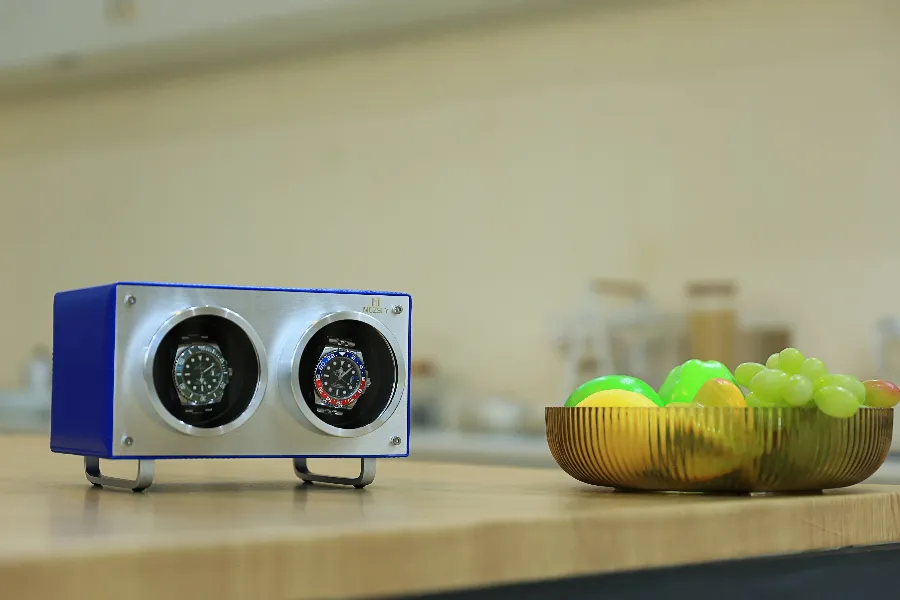
Mozsly Watch Winder
Choosing the Best Watch Winder for Rolex
The best watch winder for Rolex is not just any box that turns. It should match the technical needs of your movement and fit how you plan to store and use your watch at home, in a safe, or during travel.
Key Features of a Rolex‑Friendly Watch Winder
A good Rolex‑friendly watch winder, or Rolex watch winder box, should offer:
- Adjustable TPD programs in the 650–800 TPD range
- Bi‑directional or alternating rotation modes that suit Rolex movements
- A quiet, reliable motor suitable for a bedroom or office
- Solid build quality with a stable holder that fits your bracelet or strap
If you own a Rolex Datejust, you may search for a watch winder for a Rolex Datejust or the best watch winder for a Rolex Datejust.
If you own a diver, you may look for a watch winder for a Rolex Submariner or the best watch winder for a Rolex Submariner. In practice, the features above work well for almost all modern models.
For many people, a single watch winder for a Rolex is enough. Collectors may want a double- or triple-watch winder, or a watch winder box that also offers storage for extra straps and tools.
Best Programmable Watch Winders and Settings
Programmable watch winders give you direct control over how your Rolex is handled. They are often called auto watch winders, automatic watch winder boxes, or electric watch winders.
When you compare brands and read watch winder reviews, focus on these points:
- Can you set a custom Rolex TPD setting such as 650, 750, 850 or 950?
- Does it offer bi‑directional or alternating modes, not just one-directional?
- Does it use intermittent cycles to avoid constant spinning?
This type of control is essential if you want the best automatic watch winder for Rolex or simply a good watch winder that will not harm the movement. A recommended watch winder should clearly list TPD values and directions in the manual.
Example: MOZSLY Watch Winders for Rolex
MOZSLY watch winders are an example of the best single watch winders for Rolex in the mid‑range category. They are built around bi‑directional rotation with adjustable turns‑per‑day options such as 650, 750, 850 and 950, so you can match most Rolex calibers.
They use quiet Japanese Mabuchi motors and anti‑magnetic shielding to keep noise low and help protect the movement. The MOZSLY Single Orange Leather Series combines a compact case with a flexible watch holder that fits different bracelet sizes.
This self-winding watch winder runs on battery power for safe or travel use and features a clear front window so you can check your Rolex at a glance. Paired with the proper Rolex watch winder settings, it offers a practical way to keep a single Rolex running and ready.
When you choose the best watch winder for a Rolex, keep three actions in mind:
- Check that it covers 650–800 TPD and lets you fine‑tune the setting.
- Confirm that it offers alternating (bi‑directional) rotation.
- Pick a size (single, double, or triple) that matches how many watches you own.
With a suitable device selected, the next question is how often you should actually use a watch winder for your Rolex.
Should You Keep Your Rolex on a Watch Winder?
Many Rolex owners wonder whether they really need a watch winder, or if it is safe to let the watch stop when it is not on the wrist. The correct answer depends on how many watches you own, how complex they are, and how you wear and store them.
When a Watch Winder Makes Sense for Rolex
A watch winder for a Rolex is most helpful when it saves you time or reduces the need to set complex functions repeatedly. In these cases, using a winder is often a practical choice:
- Multi‑watch collections
If you rotate between several Rolex models during the week, a winder keeps each watch running, so you do not have to reset them every time you switch.
- Complicated functions
Owners with intricate calendars or GMT functions avoid repeated date and time‑zone adjustments. Keeping a GMT‑Master II or other complex Rolex on a winder is often easier than resetting several displays every time you pick it up.
- Infrequent wear or safe storage
If you keep a Rolex in a safe or wear it only for special events, a Rolex watch winder box can maintain the power reserve and keep the movement running. This is useful when you want the watch ready at short notice.
- Busy schedules and convenience
Some owners simply prefer the comfort of grabbing a watch that is already set, especially if mornings are rushed.
For collectors in these groups, a high‑quality automatic watch winder for Rolex or a watch winder for Rolex watches can be worth the cost.
When It’s Better to Leave Your Rolex Unwound
Not every Rolex needs to live on a winder. In many cases, letting the watch stop is entirely safe and may even be simpler.
If you own a single Rolex that you wear almost every day, a winder for Rolex usually adds little value. The natural motion of your wrist will keep the movement wound. If the watch stops after a few days off the wrist, a quick manual winding and reset is all it needs.
You might also choose to avoid a winder if:
- You have a vintage Rolex that is very old or delicate, requiring gentle treatment and expert servicing.
- You are unsure of the quality of a cheap auto watch winder and do not want to risk excess vibration or poor programming.
If you prefer not to use a winder, simple habits work well:
- Wind the crown 30–40 turns once every few weeks if the watch is not worn.
- Store the watch in a padded box or a safe place away from strong magnets and moisture.
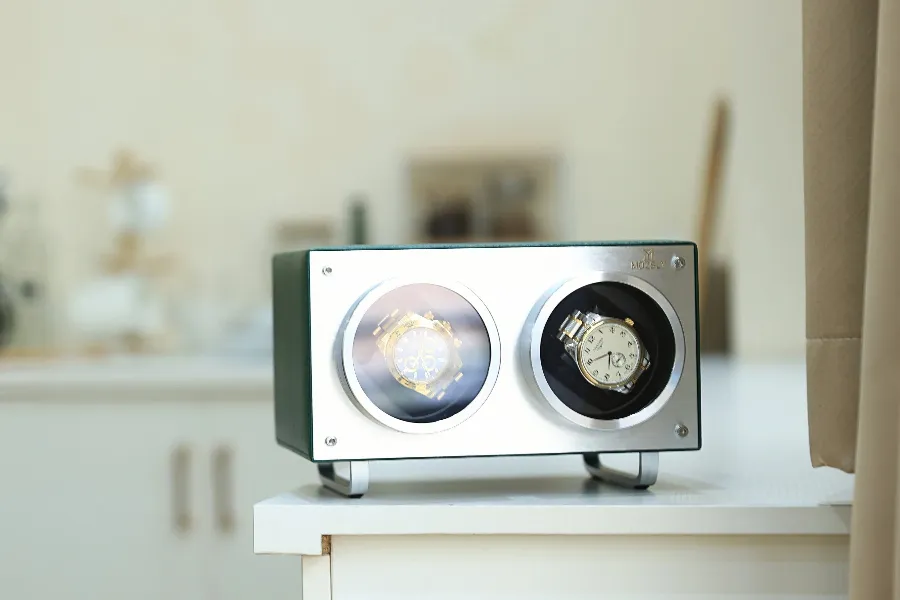
Watch Winder
Does Rolex Recommend Using a Watch Winder?
Rolex has not issued a blanket recommendation, either for or against watch winders for its watches. The company designs its automatic movements to run safely for long periods under normal wrist motion. A correctly set automatic watch winder can reproduce that motion.
A few simple points sum up the general view:
- Movement design – Rolex automatic calibers are built to handle continuous, gentle rotation. Operating within a normal Rolex TPD range does not harm the movement.
- Static storage is also safe – It is equally acceptable to let a Rolex stop between wears, as long as it is wound from time to time and serviced at the recommended intervals.
- Expert opinion – Most professional watchmakers agree that a high‑quality, programmable auto winder for Rolex is safe when used correctly, while very cheap or unregulated devices can cause unnecessary stress.
To decide what is best for you:
- Think about how many watches you rotate.
- Consider how complex your model is.
- Choose between a simple manual winding routine or setting up a watch winder for a Rolex.
In the next section, we will bring the main tips together and give you a clear next step.
Conclusion: Simple Rules for Rolex Watch Winder Settings
Keeping your Rolex in good condition does not have to be complicated. With the proper Rolex watch winder settings, a simple manual winding routine, and sensible storage, your watch can stay accurate and ready whenever you pick it up.
Use 650–800 TPD and an alternating rotation direction on a quality watch winder for automatic watches if you want your Rolex to stay running in a safe or as part of a collection.
If you prefer to let it stop, store it in a dry place, wind it 30–40 turns before wearing, and follow the regular service schedule.
If you are tired of resetting time and dates or guessing at Rolex TPD, now is a good moment to act:
- Check your current Rolex watch winder settings and adjust them to 650–800 TPD with alternating rotation.
- Choose the best-rated watch winder or best watch winder for Rolex that offers programmable TPD, bi‑directional modes, and quiet operation.
- Save this guide so you can quickly return to the tables, tips, and FAQs whenever you need them.
Your Rolex was built to be worn and enjoyed, not to cause stress. Set up your winder once, follow these simple rules, and you can reach for a ready‑to‑wear watch any time.
Rolex Watch Winder FAQs
1. Does Rolex recommend a watch winder?
Rolex does not officially require owners to use a watch winder, nor does it strongly warn against them. The brand designs its automatic movements to run safely for long periods under normal motion, whether on your wrist or on a well‑set automatic watch winder.
In short, Rolex accepts that continuous use is typical for its watches, but leaves the decision to use a Rolex watch winder up to you. The important part is to use a well‑built, programmable device and avoid very cheap units that spin too fast or vibrate heavily.
2. How many turns per day does a Rolex need on a watch winder?
Most modern Rolex automatic movements do well with about 650–800 turns per day (TPD) on a winder. This range keeps the mainspring comfortably wound without excessive motion.
If your winder’s closest setting is 900 TPD, that is still generally safe for a healthy movement, as long as:
- The winder uses gentle, intermittent cycles with rest periods.
- The watch is not kept spinning constantly without breaks.
When in doubt, choose the lowest setting in the recommended Rolex TPD range that still keeps your watch thoroughly wound.
3. How long can you leave a Rolex unwound?
Most current Rolex models have a power reserve of roughly 48–70 hours when fully wound. After that, they will stop, but stopping does not harm the movement.
You can leave a Rolex unwound for weeks or even months, provided that:
- It is stored in a dry, stable environment away from strong magnets.
- You rewind it before wearing it and follow the regular service schedule.
If the watch has been resting for a long time, give it 30–40 turns of the crown before setting the time and date. This is enough to get the movement running smoothly again.
4. What power source is best for my watch winder – AC or DC?
Both AC (wall power) and DC (batteries) can work well; the best choice depends on where you plan to place the Rolex watch winder box.
A simple way to compare:
|
Setup / Location
|
Best Power Source
|
Why it Helps
|
|
On a desk or dresser
|
AC adapter
|
Steady power, no battery changes, ideal for daily use
|
|
Inside a safe or cabinet
|
Batteries (DC)
|
No need for wall outlets or cables into the safe
|
|
Travel or temporary use
|
Batteries (DC)
|
Portable and flexible, but batteries must be replaced
|
If you mainly keep your winder in one spot at home, AC power is usually easiest. If you store your Rolex in a safe or move the watch winder often, a battery‑capable automatic watch winder gives you more flexibility.
Related Post's
Featured Video

Provide an email subscription feature for users to sign up for updates.
Follow the world of watches and cigars for exclusive content!
By subscribing to our newsletter, you will be the first to receive notifications of our latest articles, popular posts and special events.


