

Share This Post
Last month, I visited my friend Alex’s house, and planned to enjoy a nice cigar break with him.
But when I arrived, I found him adding tap water to his cigar humidor in the kitchen.
I was almost yelling at him with my maximum voice: “No! Put your humidor down! You’ll ruin your cigars!”
My warning clearly startled him. He froze and looked at me: “What the hell is wrong with you?”
I felt nervous and rushed because I’d once made the same mistake myself.
My first cigar humidor was a gift, and I thought water was water, so I did what Alex did.
A few months later, I opened it and found that some of my cigars tasted like the water in a public swimming pool.
I lost about $200 of these finely made sticks.
I felt awful and frustrated, and learned a lot about humidor humidity after that. That’s why I yelled at Alex to stop.
Since you’re reading this, I suppose you have the same question, and you almost acted just like Alex. No worries, I’ll save you from that same mistake.
In this article, I’ll explain why tap water can’t be used in a humidor, and what damage it’ll bring to your sticks. I’ll also introduce different water choices for you to consider.
If you have made this mistake, worry not. There are some simple yet practical ways to rescue your cigars as well.
After reading, you’ll be able to avoid some costly problems and better protect your cigars. Now let’s go.

How Tap Water Ruins Your Cigars
Tap water can harm your cigar humidor in several ways.
Some damage shows up quickly, while other types build up slowly and quietly.
But either way, they’ll all destroy that relaxing sensation you’re looking for when you smoke.
White Crusty Buildup Blocks Everything
Most tap water contains invisible minerals, such as calcium and magnesium. When water evaporates, these minerals are left behind, forming white powders.
These powders create a hard, chalky white crust—like limestone inside your humidifier or humidor sponge.
Not only does this white crust clog up the internal parts of the humidor, but it’s also the perfect home for bacteria, causing stinky smells and health problems over time.
If you live in an area with hard water, this damage occurs more quickly.
Hard water contains even more minerals. If you use it in your humidor, you may notice issues after just a few weeks.
Humidity output may drop by half, forcing you to spend more on new filters or frequent replacements.
It’s similar to pouring hot grease down your kitchen sink: it flows easily at first, but dries into a hard, clogging mess.
Gross, right?
Mold That Destroys Entire Collections
Tap water carries bacteria and spores, and the warm, damp environment in the humidifier is just perfect for them to grow.
Mold is the most common problem caused by tap water. It can grow inside your humidor in just 3–4 weeks if the conditions are poor.
In wetter situations, mold can develop even faster. And the mold will spread: Once one of your cigars gets mold, the whole box could be ruined.
One of my colleagues lost an entire box of premium cigars in Florida during vacation due to mold after using tap water. Ouch.
Some indicators suggest your cigar has mold. Be extra careful when you notice:
- A musty smell like a wet basement.
- Cigars feel sticky when touched.
- Tiny fuzzy white or green dots on the cigar.
If you notice any of these signs, immediately check the rest of your cigars and your humidor.
Your Cigars Start Tasting Like Chemicals
Municipal water often contains chlorine and small amounts of other chemical additives to clean it.
If you use this kind of water to humidify your cigar, tobacco has a high risk of absorbing these chemicals, which can alter its flavor.
Think of the taste when you accidentally drank the water of a public pool. You don’t want to feel that from your cigar, right?
Worse still, this damage is usually permanent and very hard to fix. Once dried tobacco absorbs these flavors, it’s tough to remove them.
Let’s do some quick math. A $25 cigar can be ruined by chemicals in the tap water, which equals about two years’ worth of distilled water at roughly $1 per gallon (about $12/year).
So paying a dollar or two now beats losing premium sticks later.

Suggested Water Options and Other Choices
Besides tap water, what else can you choose from, and which one is the best for your cigar and humidor?
Let’s rank the common choices so you can pick what works for you.
Distilled Water – The Best Choice
I won’t be tired of recommending distilled water to everyone I know, since it’s really a no-brainer choice.
Why? First of all, it’s a type of water that boils into steam and condenses back into liquid, leaving behind minerals and many impurities.
As a result, it contains almost no minerals, bacteria, or chemicals, so nothing clogs your humidifier or leaves white deposits.
That means fewer headaches and longer-lasting humidifier parts.
Your cigar will also be free of problems like mold or chemical contamination. It will stay in its best condition so you can enjoy it.
And it’s neither hard nor expensive to get. In my house, distilled water only runs about $1 per gallon at nearby grocery stores.
Use 1 gallon a month (typical for many humidors), and that’s roughly $12/year. Most of the finely made cigars are more expensive than this.
You should buy it at any grocery store and keep a spare gallon on hand in case you need it.
Forget tap water; a perfectly fresh cigar is more important than cutting corners.
Propylene Glycol Mix – Set It and Forget It
Propylene Glycol (PG) solution is a decent alternative to distilled water. You can buy this as a liquid bottle or a pre-filled capsule.
PG is a helper chemical that acts as a moisture controller. It automatically keeps the humidity in the “sweet spot” of 65–70%.
Unlike plain tap water, PG also fights off mold and bacteria, keeping your cigars safe.
It is very affordable and effective. A bottle or cartridge costs about $8–$10 and can last you 3 to 6 months.
You can also try Boveda packs as a “set and forget” method.
They look like large sauce packets, but are incredibly useful. Just toss them into your humidor, and they do all the work for you.
They add or remove moisture to hold a specific humidity level exactly where you want it.
A standard 60-gram pack costs about $5 or $6 and can be found on most online shops.
Depending on your humidor, one pack can last several months before it gets crunchy and needs to be replaced. You can buy more to keep the cycle going.
Emergency Alternatives When You’re Desperate
If you run out of distilled water and can’t get to the store right away, you CAN use tap water in an emergency, but you must clean it first!
Here’s what to do:
Boil the tap water for 10 minutes. This kills bacteria and removes some dissolved chemicals. It also causes some minerals to separate from the water.
Now, turn off the heat and let the water cool completely. You will see a chalky white powder stuck to the bottom of the pot — the mineral crust that separated from the water.
Pour it through a clean paper towel or a coffee filter to catch the last bits, and you’ll get much clearer water.
This boiled water is safe to use for about 1 to 2 weeks in emergencies, but it’s still not as pure as store-bought distilled water.
When possible, switch back to distilled water for long-term cigar storage!
Fixing Water Damage Before It’s Too Late
Used tap water already? Don’t panic. You can often save cigars and your humidor if you move quickly.
Warning Signs to Check Right Now
Check your humidor and your cigar immediately. Pay attention to these trouble indicators:
- White film on the humidifier: a mineral trace. Clean your humidor immediately.
- Humidity is dropping below 65% despite adding water: The humidifier may be clogged by the mineral crust. Give it a check.
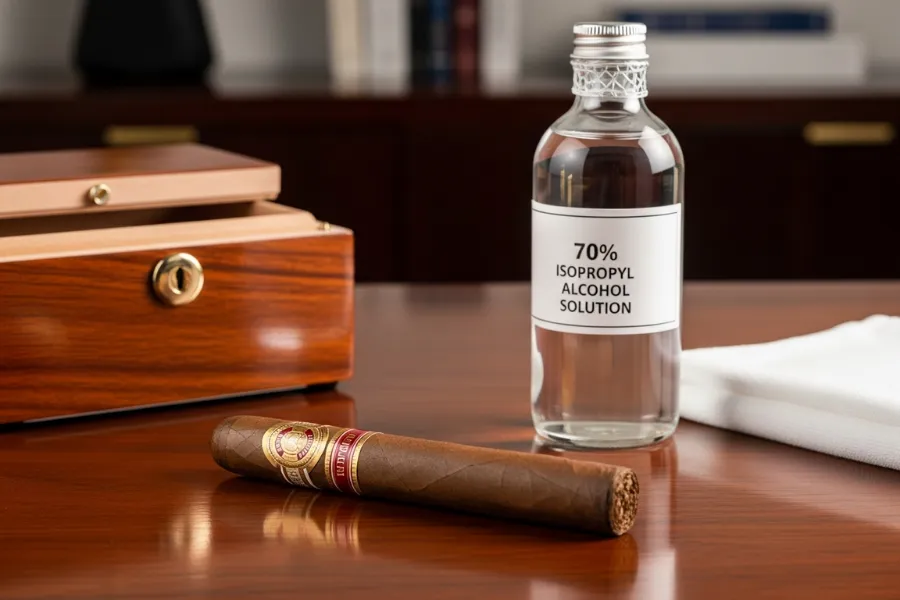
- Musty smell when opening the humidor: This is a typical sign of early mold forming. Use some white vinegar or alcohol solution with a soft cloth to clean it.
- Cigars feel spongy or sticky: The cigars are over-humidified. Toss them in an open, empty cedar box or a dryer and seasoned humidor to remove excess moisture.
- Visible green or white fuzz dots on cigars: Warning! Your cigar is moldy! Check the whole box and isolate cigars immediately.
If your cigars are over-moistened or moldy, isolate them separately and stop sharing the humidor until it is cleaned.
In the worst situations, the whole batch has to be thrown away when a stick gets moldy, so make sure you’re ready for that.
The 30-Minute Deep Clean That Saves Your Cigars
If your humidor gets moldy, smells weird, or has a mineral crust (scale) inside, you need to clean it ASAP.
Here’s how I clean mine in just half an hour:
It saves me hundreds of dollars in ruined cigars, so I believe it’ll be in your favor as well.
First, remove all your cigars. Place them safely in sealed plastic bags to prevent them from drying out or becoming contaminated while you clean the humidor.
Then, use a clean, lightly dampened cloth with a 70% alcohol solution to carefully wipe down and disinfect the inside of the humidor. This kills mold spores and germs.
Be gentle with the cedar wood. Excessive pressure may damage the casing and leave scratches.
After that, leave the humidor open for a full 24 hours. This lets the alcohol smell disappear and allows the wood to dry out before you add moisture back in completely.
Now you can refill your humidifier. But remember, use only distilled water or the PG solution.
Never use tap water, as it will only make previous efforts go to waste.
If you want, you can also check your hygrometer (the tool that measures humidity) with a simple salt test. This ensures it reads humidity accurately.
Once the hygrometer is set and the humidity stabilizes, you can safely return your cigars.
Doing this quickly can save hundreds on ruined cigars. Your wallet and cigars will thank you for taking the effort.
Simple Maintenance Schedule You Can Keep
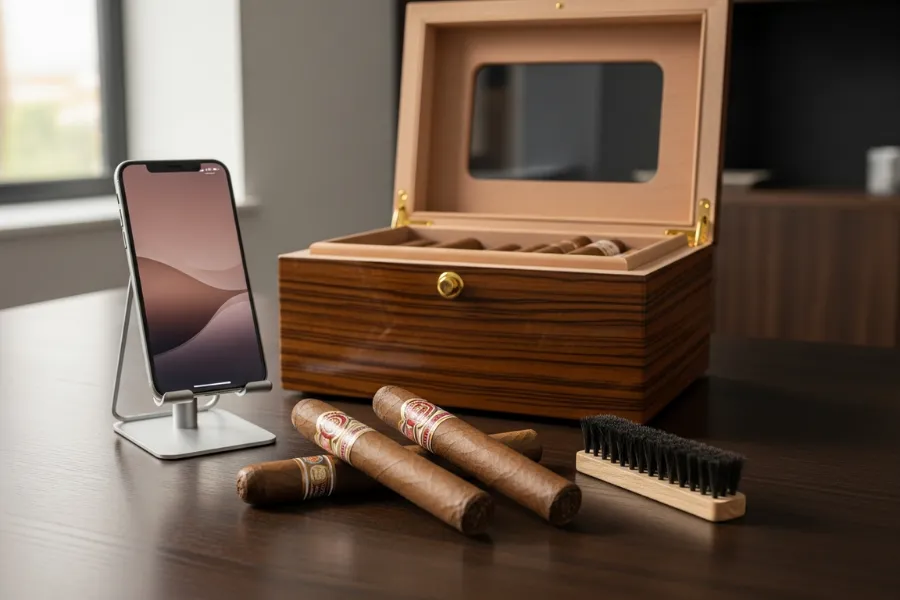
You don’t need much time to keep things safe. A simple schedule is enough to keep everything in order with perfectly moisturized cigars.
Your Monthly 5-Minute Checkup
This is simple and easy to practice. Once on the first Sunday of each month is sufficient to prevent many problems.
- Look for any white residue. Wipe clean if you find it.
- Sniff your collections. It should smell like fresh tobacco with an earthy, spicy tone, not a watery basement.
- Dump and refill the humidifier with clean distilled water, even if some remains.
If you worry that you’re too busy to keep the schedule, a phone reminder will be very handy.
I have one titled “Save My Cigars.” It really helps, and it also feels nice to know every stick in my collection is perfect and fresh every month.
Smart Money-Saving Tricks
You don’t need to break the bank to give your cigars the best care. Here are some small tips that save you a lot of money.
- Buy 5 gallons of distilled water on a regular grocery run, like on your way home. This saves you gas and trips.
- Buy humidity beads for your humidor. They cost just $20 but can last 2+ years, beating the need to replace sponges every month.
- Keep a spare gallon of distilled water on hand just in case, so you never rush or panic.
- Buy a bundle of PG or Bodeva packs when there’s a sale. One purchase, months to use.
You can also equip your humidor with a $15 TDS (total dissolved solids) meter. This handy tool will tell you if the water is low in minerals.
Clear data will always make us feel everything is under control. This is a one-time buy that gives peace of mind.
Conclusion: Your Action Plan Starting Today
Now you know why using tap water in your humidor is a huge red flag.
It’s extremely non-optimal if you want to protect cigars, and can only make things worse.
Always choose distilled water. It’s a small cost that prevents big losses.
Now it’s time for you to do something. Check your humidor right now.
If you use tap water somehow, dump it immediately and head to the store for distilled water. Save your cigar before it’s too late.
You’ll sleep better knowing your collection is safe by following these tips. So would your cigars.
Related Post's
Featured Video

Provide an email subscription feature for users to sign up for updates.
Follow the world of watches and cigars for exclusive content!
By subscribing to our newsletter, you will be the first to receive notifications of our latest articles, popular posts and special events.


