
Share This Post
The Fee of Mis-set Watch Winder
You probably searched ‘how fast should a watch winder spin’ to keep your automatic watch safe and running. I’ve made mistakes here before—and it was a costly lesson.
A few years ago, I set one of my favorite automatic watches on a watch winder without checking the turns-per-day (TPD) setting. It sounded fine. A week later, it ran fast, then stopped. The watchmaker told me the winding clutch was damaged. The repair is about $650. Ouch.
This article addresses those concerns directly. First, I’ll explain what TPD is, then why settings vary and how to test yours in 48 hours. I’ll close with a simple brand guide and safe defaults to help you avoid costly mistakes. No fluff—just practical steps you can use right away.
If you want your automatic watches to stay accurate and avoid repair bills, keep reading. My advice is concise, clear, and honest—like I’d give a friend.
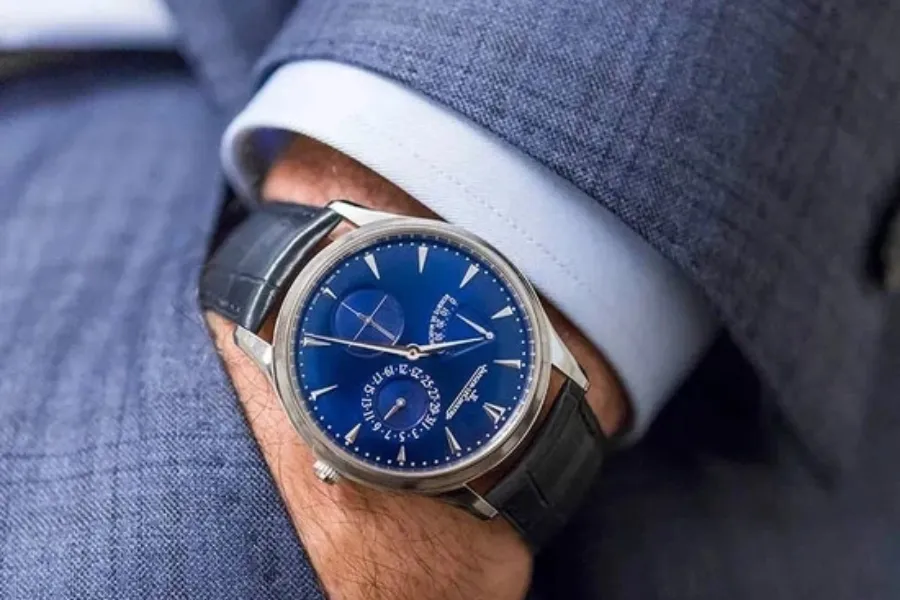
automatic watch
What is TPD and Why It’s Your Automatic Watch’s Lifeline
TPD stands for Turns Per Day, referring to the number of complete rotations a watch winder makes in a 24-hour period to wind your automatic watch.
Why Care?
Automatic watches use a rotor—a small weighted piece inside the movement that spins as you move your wrist. This winding rotor transmits energy to the mainspring, which stores power to keep the watch running.
Most modern automatic watches maintain a power reserve between 40 and 72 hours after being fully wound, though some exceed this range.
Think of Watch Winder TPD as Fuel:
Too little fuel → the car sputters.
Too much or the wrong mix → engine stress.
If a watch winder delivers too few turns, your automatic watch might wind down and stop or lose accuracy. If it delivers too many turns or spins in the wrong direction, the winding mechanism’s clutch or the movement’s gears can be stressed, increasing wear.
These details matter because TPD settings differ across watch brands and models.
Why Different Automatic Watches Require Distinct Setup?
Automatic watches differ in rotor design, weight, winding efficiency, and mainspring strength. These factors affect the optimal TPD and winding direction required for each brand and model.
Main Automatic Watch Differences:
Rotor weight and shape: heavier rotors need fewer turns.
Mainspring strength: stiffer springs need more winding.
Winding efficiency: some movements wind better in one direction.
Precision engineering: luxury movements sometimes need finer tuning.
Example: Rolex vs. Seiko
Rolex movements are extremely precise and may require more precise settings. Seiko movements often wind easily and tolerate a broader range. Swiss and Japanese designs follow different priorities, so their winding needs can differ.
The benefit of the right settings is simple: better accuracy, less wear, and fewer repairs. Therefore, the settings differ for automatic watches of various brands and models.
The Different Brand Settings Guide of Watch Winder
Use these as starting points. If you have the maker’s specs, follow those first. Typical ranges are only — always cross-check your model’s manual.
Rolex — about 650 TPD, bidirectional
Omega — about 650–800 TPD, bidirectional
Patek Philippe — about 800+ TPD, counterclockwise
Tag Heuer — about 650–900 TPD, bidirectional
Breitling — about 650–900 TPD, clockwise (many models)
Seiko — about 650 TPD, clockwise (most)
Tudor — about 650–900 TPD, bidirectional
IWC — about 650–800 TPD, bidirectional
Universal safe setting: 650 TPD, bidirectional.
This is a conservative and practical starting point for many automatic watches. Although there are universal safe settings, we sometimes encounter exceptions and unknown ones.
However, There are Exceptions.
There are some important exceptions to keep in mind. Vintage watches can be more fragile and may be best kept off winders or used with minimal TPD settings. High-beat models may need different TPD, and manual-wind-only watches should never go on a winder.
If you’re unsure which category your watch fits into or you encounter new issues, consult a professional for tailored advice.
Emergency Settings for Unknown Automatic Watches
No specs? Don’t panic. Start with 650 TPD, bidirectional.
Why 650 TPD? It falls within the middle of the common range and serves as a conservative starting point for many automatic watches. It’s gentle enough to avoid overstressing most movements while still keeping them wound.
I use this default when I don’t know a model. Then I run the 48-hour test (below) to confirm. Whether it’s an unknown brand or a well-known brand of automatic watches, we need to understand the potential risks of incorrect TPD settings.
The Hidden Dangers of Watch Winder Wrong Speeds
Wrong settings cause real damage. Here’s what can happen.
Overwinding Risks:
Broken or worn clutch and winding gears. Internal stress can lead to costly repairs of approximately $500–$1,000 or more. A watchmaker told me about a rotor tearing a winding pinion because it was continuously over-spun. Expensive fix.
Underwinding Risks:
It stops between wears.
Timekeeping becomes unreliable (gaining or losing seconds).
Lubricants settle and don’t spread properly, increasing friction.
Relatable Scenarios:
It gains 30 seconds a day.
It stops after 20 hours instead of running the full reserve.
You hear odd ticking inside the case.
Remember, prevention is easy: just pick a reasonable TPD value, run the tests, and keep a close eye for any red flags.
Warning Signs Your Settings Are Wrong
Look for these red flags. If you see any, act.
Running fast or slow.
Action: Test accuracy for 48 hours.
Stopping frequently.
Action: Increase TPD slightly.
Unusual noises from the case.
Action: Stop the watch winder and see a watchmaker.
Excessive heat near the back or crown.
Action: Stop immediately.
The rotor feels loose or rattles.
Action: Get a pro to inspect.
Short power reserve (stops well before expected hours).
Action: Adjust TPD or schedule service.
If adjustments don’t help, consider consulting a professional. However, if it’s a straightforward problem, we can try the 48-Hour Test Method.
The 48-Hour Test Method (Foolproof Setup Guide)
Manually wind it 20–30 turns (or until you feel resistance). This gives a full reserve. The screw-down crown is secured before winding.
Place it on the watch winder at the lowest TPD setting, bidirectional.
Run the automatic watch winder for 48 hours. Record an exact start time (photo of watch/date) and compare after 48 hours; if drift exceeds manufacturer tolerance or ~±15s/day, adjust or consult a pro.
Don’t exceed the recommended number of manual turns listed by the maker. Timestamp/photo at start, timer apps or a timegrapher if available, log total drift after 48 hours.
Check Timekeeping:
If it’s within normal tolerance, that TPD works.
If it stopped or seems underwound, increase to the next TPD.
If it runs oddly or you notice heat/noise, stop the watch winder and reduce TPD or change direction.
Troubleshooting:
No improvement after higher TPD? Consider service.
Strange noise or heat? Stop and consult a watchmaker.
When to Adjust vs. When to Call a Professional.
Adjust if:
It responds when you change TPD.
The issue is mild (a few seconds off).
There’s no noise, heat, or loose parts.
Call a Professional if:
Problems persist across all TPD settings.
You hear grinding, clicking, or loud rattles.
There’s visible damage or moisture.
It gets hot during winding.
If I’m unsure, I get a pro involved. Better safe than sorry.
I tried various automatic watch winders of different brands and models to store my automatic watch, but the results were unsatisfactory. Eventually, with a friend’s help, I tried a Mozsly watch winder. I’m sharing what I learned from using it — just my experience, not an ad.
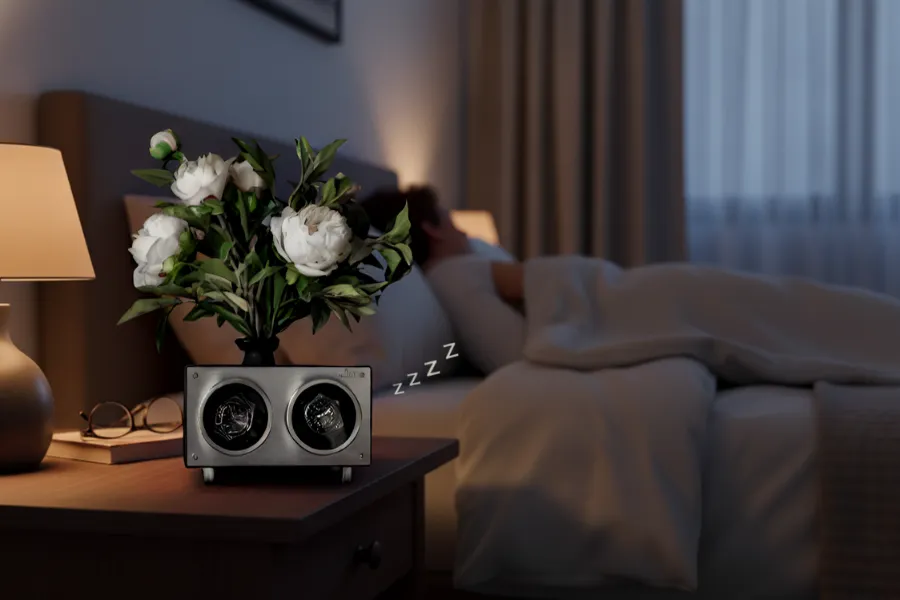
watch winder
My Mozsly Watch Winder Setup Experience
I share my experience as an independent user without payment. Let me tell you what I know about the winder device.
The Mozsly unit I tried offers four TPD options: 650, 800, 1050, and 1250, as well as three direction choices (clockwise, counterclockwise, and bidirectional). The model I used features quiet Japanese motors and operates on either AC or battery power.
Recommended Starting Settings:
Unknown one: 650 TPD, bidirectional
Luxury Swiss: 800–1200 TPD, check brand direction.
Japanese automatic: 650–900 TPD, usually clockwise
Timing cycles: My Mozsly watch winder short winding bursts with rest periods.
Mozsly Watch Winder’s Smart Features I Use
These features aim to mimic wrist motion and reduce continuous strain on the movement.
Smart Features:
The Mozsly unit includes rest breaks between rotations. The hourly cycles use short 3–8 minute winding bursts that approximate wrist motion and reduce wear.
Other Practical Features :
Daisy-chain capability for multiple units.
Quiet motors suitable for bedroom use.
AC and battery power options.
Three-year warranty period.
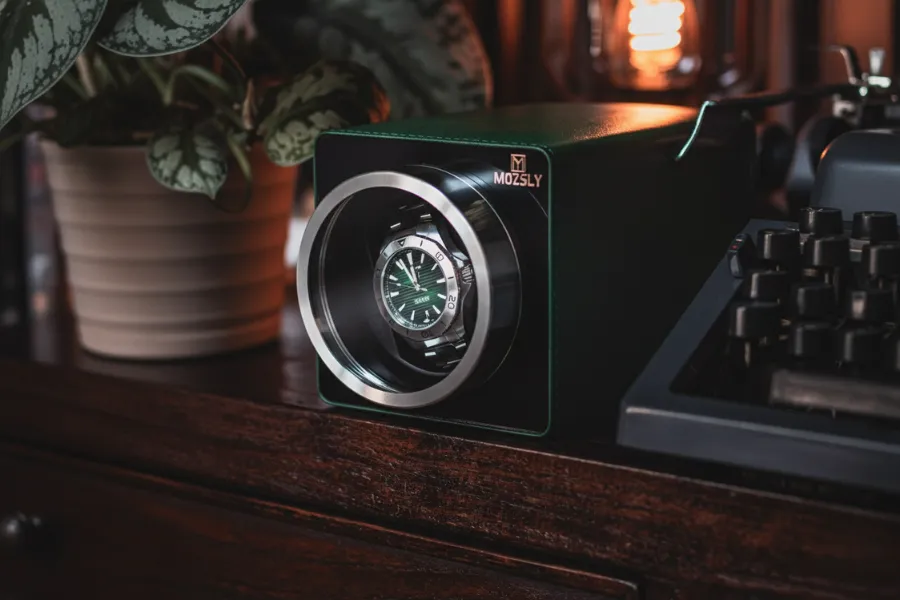
watch winder
Quick Reference Guide and Key Takeaways
Keep These Handy:
Start with 650 TPD, bidirectional for an unknown one.
Most of them are happy with 650–900 TPD.
Use the 48-hour test to confirm settings.
Adjust settings if it responds. If not, get professional help.
Select an automatic watch winder featuring adjustable TPD, multiple directions, a quiet motor, and adjustable rest periods.
Mini Brand Chart:
Typical starting points include verifying your model’s manual or the manufacturer’s page before use.
Rolex: 650 TPD, bidirectional
Omega: 650–800 TPD, bidirectional
Patek: 800+ TPD, counterclockwise
Seiko: 650 TPD, clockwise
Breitling: 650–900 TPD, clockwise
Using the unit’s rest-cycle feature can reduce continuous stress on the movement; in my experience, that felt gentler than continuous spinning.
What Makes a Quality Watch Winder Worth Buying
A good watch winder protects your automatic watch.
Look for:
Adjustable TPD
Multiple rotation directions
Quiet motor
Rest periods between winds
Solid build and reliable power
A decent one costs less than many major repairs. I’d rather spend a little now than a lot later. I hope you think so too.
Your Automatic Watch Deserves the Right Care
You came here worried about settings — and now you have a clear plan.
We covered what TPD is, why different automatic watches require different settings, the real risks associated with incorrect settings, a brand guide, and a simple 48-hour test you can conduct today. If you follow the steps, you’ll avoid the costly surprise I had.
Next Steps:
Start with 650 TPD, bidirectional for an unknown one. Do the 48-hour test.
If you own a Mozsly watch winder, try the recommended starting settings above.
See a pro if you hear noise, feel heat, or if problems persist.
Take care of your automatic watch — it’s an investment and it tells time for you. A few minutes of setup now can save you hundreds later.
If this helped, please share it with a friend who owns an automatic watch. And hey — if you try the 48-hour test, let me know how it goes. I’m curious.
Related Post's
Featured Video
For privacy reasons YouTube needs your permission to be loaded. For more details, please see our Privacy Policy.

Provide an email subscription feature for users to sign up for updates.
Follow the world of watches and cigars for exclusive content!
By subscribing to our newsletter, you will be the first to receive notifications of our latest articles, popular posts and special events.


