

Share This Post
I get this question all the time.
How long will batteries actually last in a watch winder? My watch winder is 650TPD and can last approximately 40 days on AA batteries.
You want a clear, no-nonsense answer. So you can pack for a business trip or travel, stop worrying about your automatic watch breaking in the safe, or decide whether to go battery or AC.

automatic watch
I’ll tell you typical numbers, the costs, and simple tips I use myself — plus what other users report. By the end, you’ll know what to expect and what to buy.
A quick note
An automatic watch is a self-winding mechanical watch that gets power from your wrist motion — it does NOT need a battery like a quartz watch. If you wondered, “Do automatic watches have batteries?”—the short answer is no, unless it’s a quartz automatic hybrid.
Watch Winder Battery Life Reality Check
What You Can Actually Expect. The data presented are typical reference values. Please refer to the brand’s official explanation for specific details. Here’s the short version, so you get a quick idea fast.
-
AA batteries: In real life, users report roughly 40–50 days on many single-watch winder with standard settings.
-
D-cell batteries: Usually 3–6 months, depending on the automatic watch’s weight and rotation cycles.
-
Premium models: High-end battery watch winders can even run approximately 6–12 months.
Real Battery Life Numbers
First, a quick definition. TPD (turns per day, also called RPD) is the number of complete rotations the winder makes each day. More turns = more motor work = faster battery drain.
Practical numbers to expect:
-
AA (alkaline): 40–50 days typical on a small single-watch winder. Some users hit 60 days with very light settings.
-
D-cell: 3–6 months because D-cells store more energy.
-
Premium battery models: about 6–12 months, thanks to efficient motors and larger cells.
Personal note
I use a single-Mozsly watch winder on AAs. At 650 TPD with a leather-strapped auto watch, I get about 40 days. If I drop the speed and rest it when I travel, I stretch a set to nearly 3 months. Little changes go a long way. Battery life and runtime are also affected by many factors.
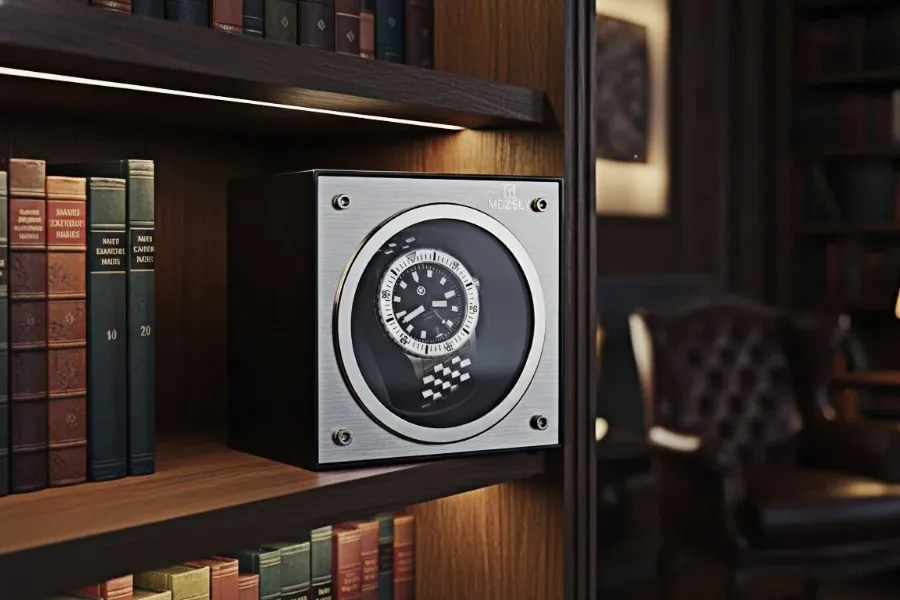
single-Mozsly watch winder
What Actually Affects a Watch Winder’s Battery Life
Battery life isn’t a single number. Many factors change how long a set will last.
The factors:
-
Watch weight matters. A leather-band auto watch often weighs 100–120 g. A complete metal bracelet can be 160–180 g. Heavier automatic watches need more torque and drain batteries faster.
-
TPD/RPD settings matter. Running 900–1,200 TPD uses more power than 650–800 TPD.
-
Usage patterns matter. If you only run the winder on weekends, batteries last much longer. I know someone who used their winder intermittently and stayed on their first batteries for 8 months.
-
Motor and gearing efficiency. Better design wastes less power.
-
Environment matters. Cold or old batteries drain faster.
These factors will affect the cost of using batteries to varying degrees.
Calculate Watch Winder’s True Costs
The real price of a watch winder battery is the power. Don’t just think of the battery price. Think monthly and 5-year costs. The data presented are typical reference values.
Please refer to the brand’s official explanation for specific details. Energy math: Energy (Wh) = Capacity (Ah) × Voltage (V); 1 Ah = 1000 mAh.
Annual Battery Expenses Breakdown
-
Assumptions: AA pair = about $1–2; replacements = 6–12/yr.
-
Annual: about $12–24
-
Monthly: about $1–2
-
-
Assumptions:D-cell Pair = about $3–5; replacements = 2–4/yr.
-
Annual: about $12–20
-
Monthly: about $1–1.70
-
-
AC-powered(Depending on usage time)
-
Annual: about $1.8–7.8
-
Monthly: about $0.15–0.65
-
A tip on lithium vs alkaline: lithium cells cost about 3–4× more but may give about 2× the runtime.
For most people, alkaline is a better value unless you need long-term storage and want reduced leakage risk. Watch winders come in both battery-powered and rechargeable types, and the two types have different costs.
Battery vs AC Power of Total Ownership Costs
Compare a 5-year view.
-
5-year battery cost
-
AA winders: about $60–120 in batteries
-
D-cell winders: about $60–100 in batteries
-
Plus initial winder price: about $50–200
-
-
-
Higher upfront cost: about $100–300
-
Minimal electricity: about $1.8– 7.8 per year
-
No battery swaps or surprise dead batteries
-
If you plan continuous home use for 2–3+ years, AC often wins on cost and convenience. If you travel, use a safe, or want portability, battery power usually makes more sense. Therefore, make sure you pick batteries compatible with your winder.
Match Watch Winder’s Battery Life to Your Collection
How many automatic watches do you have? How often do you wear them? Where do you keep them? Answer those, and the choice gets easier.
Single Automatic Watch Owners: Maximize Efficiency
If you own one auto watch, a battery-powered single watch winder is smart and compact.
For daily wearers:
-
AA-powered winders work great.
-
Cost: about $1–2/month for batteries.
-
Tip: Use the lowest TPD that still keeps your watch wound.
For occasional wearers:
-
D-cell winders give longer stretches between swaps.
-
Set TPD to 650–800 to avoid overworking the motor and to keep complications from stopping.
I travel a lot, so I carry a small Mozsly watch winder in my bag. No outlets needed — just fresh AAs and I’m set.
Travel and Safe Storage Considerations
Battery winders are built for portability:
-
No voltage converters or outlet adapters needed.
-
Typical travel sizes: under 150mm and 1–2 pounds.
-
Great for safes: you can run a winder inside a safe without cords.
You can put your watch winder in a safe. Battery-powered watch winder models help you meet that requirement without rewiring your safety. After understanding the situation, you will make an informed purchasing decision based on your specific circumstances.
Smart Buying Decisions: Choose the Right Watch Winder
Mozsly vs competition — a quick look:
-
Mozsly watch windermodels often offer dual power (AC + 2×AA) and daisy-chain options. Many list approximately 1-2 months at 650 TPD.
-
Wolf and similar premium brands often last 3–6 months on D-cells and have top-notch finishes.
-
Heiden models may run 1–3 months on D-batteries, depending on settings.
If you want flexibility and portability, mid-to-high-end brands are worth considering. If battery runtime and finish are your top priorities, premium brands can be worth the premium — if you’re ready to pay for it.
Besides, you need to pay attention to battery optimization strategies and warning signs.
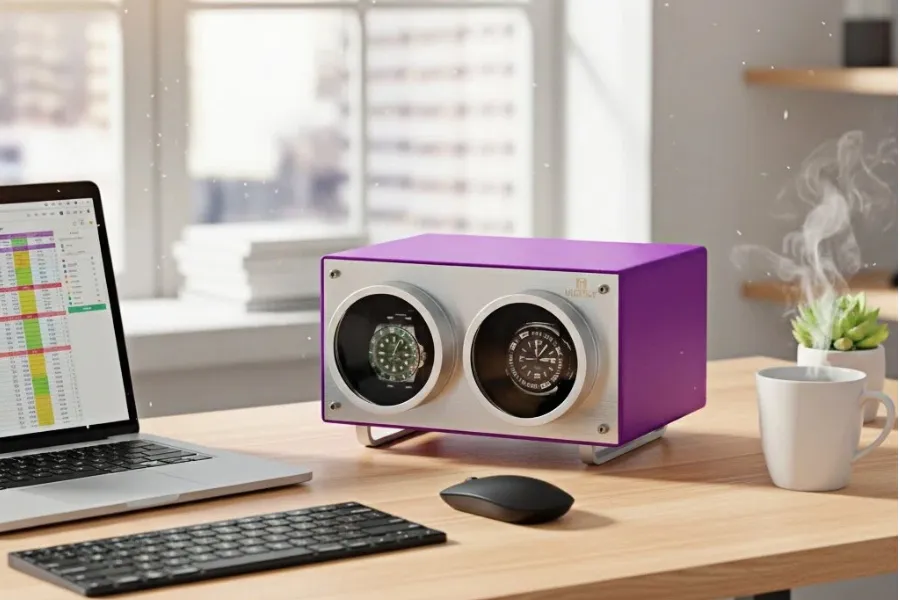
double-Mozsly watch winder
Watch Winder Battery Optimization Strategies
Simple, practical ways to stretch runtime:
-
Use the minimum TPD your watch needs (often 650–800).
-
Rotate auto watches rather than run a box full of winders 24/7.
-
Let the winder rest now and then —the motors last longer and use less power.
-
Store spare batteries cool and dry.
-
Choose lithium only if you need very long storage and accept the higher cost.
Warning Signs and Replacement Timing
Watch for these signs:
-
The watch winder slows or stops.
-
Your watch ticks but keeps poor time.
-
A low-power light or beep (if present).
Don’t wait for a complete failure. Replace batteries when the winder feels sluggish. Keep a spare pair in your hand.
Quick Decision Guide: Choose the Perfect Watch Winder
Choose AA-powered if:
-
You own 1–2 automatic watches.
-
You travel often.
-
You use the winder occasionally.
-
You want a low upfront cost.
Choose D-cell if:
-
You have 3–4 automatic watches and a rotation plan.
-
You need long runtimes in a safe.
-
You want fewer battery swaps.
Choose AC-powered if:
-
You own 5+ automatic watches.
-
You plan continuous home use for 3+ years.
-
You want the lowest long-term cost.
Key Takeaways
-
Battery life reality: AA ≈ 1–2 months, D-cell ≈ 3–6 months, premium ≈ 6–12 months. Automatic watches’ weight and TPD matter most.
-
Best value picks: Single auto watch = AA; multiple automatic watches or safes = D-cell or AC.
Smart tip
Look for dual-power models — like some Mozsly watch winder units — and think about 5-year costs, not just the sticker price. It can power your watch for 1-2 months on full wind. Many of Mozsly’s automatic watch winders last 5 years with Lithium-based batteries.
Final thought and a quick next step
You came here to stop guessing. This clears things up: how long batteries last, what affects runtime, and which option fits your habit. If you want less hassle, choose D-cells or AC. If you value portability, pick AA and carry spares.
If this helps, check your current winder’s TPD and your watch’s weight. Then decide: replace with D-cells for fewer swaps, or enjoy the flexibility of an AA-powered travel winder like the Mozsly watch winder. If you share this with a friend, they’ll thank you.
Got more questions about settings, or want a quick recommendation based on your collection? Ask me — I’ll help you pick.
Related Post's
Featured Video
For privacy reasons YouTube needs your permission to be loaded. For more details, please see our Privacy Policy.

Provide an email subscription feature for users to sign up for updates.
Follow the world of watches and cigars for exclusive content!
By subscribing to our newsletter, you will be the first to receive notifications of our latest articles, popular posts and special events.


