

Share This Post
Some expect they cannot fully enjoy a cigar until they have set up a humidor. Nowadays, this dedicated temperature-controlled box is often the golden standard for cigar storage.
But not everyone has the space, the budget, or the need for one on-site. Fortunately, innovative, practical strategies do exist.
With these innovative alternatives, cigars can keep fresh and flavorful without a humidor. Whether you’re a casual smoker or just exploring the cigar world, you’ll enjoy these methods.
This guide takes a deep dive into how to store cigars without a humidor and keep them nice and intact. We’ll reveal the vital factors for cigar storage, so you know what to focus on.
We’ll also list some simple temporary humidor alternatives. Plus, there’ll also be a risk explanation of keeping cigars without a proper humidor.
In this guide, we’ll outline everything you want to understand. Besides that, we’re backed by solid information and practical advice. After reading, you’ll leave here as a seasoned cigar preserver.
You’ll know what you’re doing, even using standard family tools. Now let’s step into the woods.

How Can I Store Cigars Without a Humidor?
Cigars are sensitive to their surroundings. They are made entirely from rolled tobacco leaves, which can dry out or absorb excessive moisture if stored improperly.
Ideal storage conditions for cigars mimic those of their tropical origins, mainly:
- Temperature: Around 70°F (21°C)
- Humidity: Around 65–72% relative humidity (RH)
When too dry, cigars become brittle and lose essential oils. You’ll only get a harsh, unpleasant smoke when drawing.
On the other hand, over‑moistened cigars can be too moist. This is also fatal to premium sticks. It affects pleasant burning and promotes mold formation.
So the goal is balance. You need a steady and mild environment to keep these sticks fresh.
Luckily, you can create this environment without a humidor — at least in the short- to medium-term. For long-term storage, a humidor remains necessary.
Now, let’s see some simple methods that you can make with just household items.
Best Way to Store Cigars Without a Humidor
What is the best way to store a cigar without a humidor? The answer varies. And the goal is never to find a universal answer. It’s to find the best method for your own case.
Here are some practical tips and tricks that actually work in real life. See if there’s anything that fits your liking.
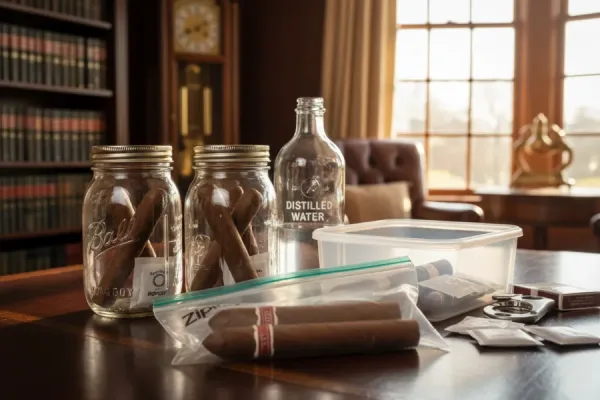
Use a Ziploc Bag and a Moisture Source
A Ziploc bag with a simple moisture source can be a makeshift humidor. While not ideal for long-term storage, this approach works well on a weekly basis.
Here’s how to do it efficiently:
- Place your cigars in a sturdy Ziploc bag. Make sure they are loosely packed so they don’t get crushed.
- Add a Boveda humidity pack (65–72% RH is ideal) to maintain proper humidity levels. These packs are specially designed for humidity control and are safe for cigars.
- If you don’t have a Boveda pack, a small piece of a clean, lightly dampened sponge also works. Place it in a separate perforated bag so it doesn’t touch the cigars directly.
- Seal the bag and ensure it is airtight. Store it in a cool, dark place away from direct sunlight and heat sources.
This simple setup gives your cigars a controlled micro‑environment. It’s also often the easiest solution for beginners.
How long will cigars last in a Ziploc bag? With proper humidity packs, cigars can stay fresh in a Ziploc bag for around 1–3 weeks.
If you use the damp sponge instead, aim for the 1–2 week mark and check daily for mold.
Beyond that, you may notice flavor deterioration. Other problems, such as a tighter or looser draw and a less enjoyable smoke, may also occur.
Tupperware Humidor (a.k.a. Tupperdor)
Plastic containers like Tupperware can create an affordable, makeshift humidor. They are easy to find and quite effective, making them ideal for temporary cigar storage.
This method is also quite beginner-friendly. If you aren’t ready to invest in a full humidor, try this.
Here’s how to create your own “Tupperdor”:
- Choose the correct container. Select a Tupperware or food‑grade plastic container with an airtight seal. Avoid containers that keep strong food odors.
- Line with a cedar sheet. If possible, line the bottom with a thin sheet of Spanish cedar (often found in cigar boxes). Cedar enhances flavor and helps regulate humidity.
- Add humidification devices. Place a Boveda pack or other two‑way humidity pack inside the container to maintain humidity.
- If you use a sponge or a small dish of water as humidity control, use distilled water only. Avoid tap water, as it can promote mold.
- Don’t forget to separate them from your sticks. Direct contact with water also makes your cigars soggy and puts them in danger of mold.
- Store properly. Keep the container out of direct sunlight and maintain a steady room temperature. Avoid AC vents, radiators, or places with big temperature swings.
Can you store cigars in Tupperware? Yes! Many cigar enthusiasts use a Tupperdor as an affordable, effective way to store cigars.
A well‑set Tupperdor can keep a small to medium collection in good shape for several weeks to a few months. But you still need to monitor the humidity level and change the packs in time.
Glass Jars or Mason Jars
A glass jar with a tight seal offers another affordable option for storing cigars. This method is best for small quantities and short to medium durations. It’s also relatively easy to find and install:
- Place your cigars inside the jar, ensuring they don’t press too tightly against the walls. Leave a little space for airflow.
- Add a small humidifier or Boveda pack to regulate humidity inside the jar.
- Keep the jar in a cool, dark place. Light passing through the glasses can heat the cigars and affect their flavor. So always avoid windowsills or bright shelves.
- Check regularly to ensure moisture levels remain stable and nothing goes wrong.
Many people also use wide‑mouth Mason jars as travel‑friendly mini humidors. If you plan to carry just a few sticks, this method is especially suited to you.
You can set them up just like the glass jars. When set up with a proper humidity pack, they can work very well for a few weeks.
Temporary Solutions for Emergencies
Simple tools can be a last resort if you’re short on time or materials. It also helps when you need to keep cigars from drying out entirely for a few days.
For example, wrap cigars in aluminum foil or plastic wrap, then store them in a dark, cool place. This creates a short-term humid condition for your sticks to breathe.
You can also wrap cigars in a clean paper towel. Lightly moisten the towel with distilled water, then place your cigar in a Ziploc bag.
After that, open the bag briefly once a day to let fresh air in and make sure the towel isn’t soaking wet.
While these techniques do not offer ideal conditions, they are far superior to exposing your cigars to the elements. Use them only as a short‑term safety net for 3–5 days, not weeks.
The Hidden Dangers of Humidor-Free Storage
While DIY hacks work in a pinch, they are not long-term solutions. Storing cigars without a calibrated humidor is a gamble with your investment.
Without precise climate control, the flavor, texture, and overall smoking experience of your cigars are all at risk. Here are some primary pitfalls to watch out for:
Brittle Wrappers and Cracks
Low humidity strips cigars of their natural moisture, making the delicate outer leaves brittle. You will end up with sticks with split seams and flaking wrappers.
It also can’t give you a nice smoke. You’ll taste a mouthful of bitterness instead of the spicy, earthy flavor. Besides that, you’ll get a harsh and uneven burn.
If a cigar feels “crunchy” or light when squeezed, it’s dry at a dangerous level. Indeed, you can rehydrate them. But the original oils and structural integrity are hard to recover.
Mold and “Plume” Confusion
Excess moisture in airtight containers is a breeding ground for mold. If you find fuzzy white, green, or blue spots on your cigar, it’s moldy. These spots are destructive and render a cigar unsmokable.
Many beginners will confuse mold with plume. Plume is tiny white crystals from aged oils, not fuzzy spots. Mold also delivers an unpleasant smell, while the plume is odorless.
But there are also some smart ways to prevent mold. Try these smart tips I’ve used:
- Use distilled water only to prevent bacterial growth and contamination by impurities.
- Open your containers briefly every few days to introduce some fresh air.
- Monitor the temperature. Keep storage below 70°F (21°C) to discourage mold growth.
Tobacco Beetle Infestations
Tobacco beetle larvae can hatch if temperatures climb above 75°F (24°C). These pests tunnel through your cigars, leaving behind tiny “pinholes” and fine tobacco dust.
An infestation in a small Tupperware container can ruin your entire stash in just a few days. A proper humidor with Spanish cedar lining could effectively prevent it. After all, cedar is a natural, non-toxic repellent.
Evaporating Essential Oils
The natural oils give a cigar its soul. They carry the complex notes of earth, spice, and cocoa. They need a mild condition to stay stable.
If too dry, these oils evaporate. The smoke from that cigar becomes flat and one-dimensional like burnt cardboard.
In damp conditions, excess moisture washes them away. The tobacco becomes “muted” and difficult to light.
Worse than that, these oils are irreplaceable. Even if the cigar is later recovered by other means, you can’t have these volatile oils back anymore.
Shortened Aging Potential
Cigars are like fine wine, as they both benefit from time. In a proper humidor, a cigar can improve for years. It develops a deeper, more sophisticated flavor over time in a controlled environment.
Without a proper humidor, your cigar suffers from time rather than benefits. It starts to degrade and loses its flavor within weeks. If you want to age your cigars, a humidor is non-negotiable.

How to Keep Cigars Fresh Without a Humidor?
Below is a short checklist of some simple strategies. Use them to keep your cigars fresh and sparkling without a humidor.
These methods are also easy to build. You can implement them using items you most likely already own.
- Maintain stable humidity: Use items such as Boveda packs or lightly damp sponges to adjust humidity. Avoid over‑wetting anything inside your container.
- Avoid direct sunlight and heat: Excessive heat can quickly dry out cigars. Warmth also encourages beetles and mold. Always store them in a cool, dark environment.
- Seal containers tightly: An airtight seal locks moisture in and slows drying. No matter what DIY humidor you used, make sure the seal is solid.
- Inspect cigars regularly: Check them every few days (or daily if using very DIY methods). Look for signs and symptoms of mold, drying out, or any unusual odor.
- Prefer distilled water: Avoid tap water, as impurities and minerals can damage cigars or humidifiers. It also encourages mold growth. Distilled water is always a safer option.
These habits will help you get the most out of any temporary storage method. But you’ll face the ultimate choice one day: Whether a dedicated humidor suits your life.

Do I need a Humidor for Cigars?
Frankly, the strategies above can work wonders in the short term. But there’s no denying that humidors are the best solution for cigar storage.
So the question arises: do you actually need one? That entirely depends on your lifestyle, preferences, and the size of your cigar collection.
Reasons You Need a Humidor
Investing in a humidor is a no‑brainer for serious cigar enthusiasts or collectors. Here’s why you should consider it.
First, long‑term preservation of high‑quality cigars. A humidor ensures your cigars age gracefully. It also retains their oils, natural sugars, and complex flavor profiles.
Whether you like Arturo Fuente or Cohiba, a humidor will keep your cigars at their best for months or even years.
Plus, you’ll get consistent flavor and moisture in your sticks with a humidor. Smoking a poorly stored cigar is like drinking flat soda—an insult to the product.
That’s when humidors shine. They offer steady humidity and temperature, ensuring consistent smoke.
Whether it’s your first or 50th cigar from the box, you always get the same best taste. Besides that, the protection from environmental extremes that a humidor gives is invaluable.
Fluctuating temperature and humidity can wreak havoc on cigars. Seasonal changes or unstable indoor conditions can all severely damage your sticks.
In this case, a humidor acts as a protective buffer. They shield your cigars from rapid changes in their surroundings.
If you’re starting to buy boxes instead of singles, a proper humidor is your necessity. The same as you want to age cigars on purpose. It’s essential for cigars to develop.
Reasons You Might Not Need a Humidor
Conversely, humidors aren’t always the default choice. They are not so necessary for some casual smokers or beginners. Here’s why you might manage fine without one for now.
The most typical scenario is that you smoke occasionally and don’t have a large collection. If you sometimes revel in cigars and typically don’t store more than 5–10 at a time, household solutions are often enough.
In this case, use Mason jars, Ziploc bags, or temporary Tupperware solutions carefree. They’re cost-efficient, simple, and effective for short‑term use.
A humidor is also not very suitable for a quick smoker. Investing in one is unnecessary if you smoke through cigars within one or two weeks after purchasing.
Many short‑term options (like a Tupperdor or humidity pouch) work for this situation. These options ensure cigars stay fresh long enough to enjoy your stash.
For novice cigar enthusiasts, it’s okay to experiment with these basic storage strategies. You may also explore your preferences and collection size during this process.
However, as your interest grows, transitioning is necessary. A high‑quality portable humidor or cedar‑lined humidor will make a noticeable difference to your sticks.
Your cigars will grow in flavor and consistency. You’ll also get a sense of peace of mind. So embrace one bravely when the time has come.
How Long Do Cigars Last Without a Humidor?
The answer depends heavily on storage conditions. The method you chose also plays a huge role.
Here’s a rough timeline based on common storage setups. I also combine them with some optimal use cases based on my experience. Use them as your reference.
| Storage Method | Estimated Freshness Duration | Best Use Case |
| Open-Air / Countertop | 2–3 Days | Immediate smoking only; drying begins instantly. |
| Ziploc Bag (No Humidifier) | 3–5 Days | Transporting cigars or very short-term travel. |
| Ziploc + Boveda/Humidity Pack | 1–3 Weeks | For short trips, ensure the bag is airtight and kept dark. |
| Mason Jar + Humidity Pack | 4–8 Weeks | Small batches; keep away from direct sunlight/heat. |
| Tupperware (Tupperdor) + Boveda | 1–2 Months | The best “budget” long-term DIY storage option. |
| Cooler (Coolerdor) + Boveda | 3–6 Months | Bulk storage; ideal for larger collections in stable rooms. |
If properly sealed and stored at a consistent humidity level, cigars can survive for a few weeks without permanent damage. However, the key to longevity is always controlled humidity and temperature.
Once your timeline shifts from weeks to months or years, you’ll need to take the next step. A well-built humidor becomes a necessary investment rather than just a recommendation.

Conclusion and Final Thoughts
When storing cigars without a humidor, the key is understanding your cigars’ basic needs: humidity and temperature.
There are plenty of creative and practical solutions to keep your sticks fresh. From Ziploc bags to Tupperware and Mason jars, all are easy to make and use.
You can use them to store your collections until you’re ready to enjoy them. For short‑term or light use, these household methods work quite well when done right.
But as your collection grows, relying on makeshift methods becomes risky. Higher‑end cigars also need a better home to rest and grow. By then, a humidor is your best friend.
Are you ready to take your cigar storage to the next level? Don’t settle for makeshift methods when you can explore premium options. High-quality humidors are designed specifically for cigar enthusiasts like you.
It’s more than a storage box. It’s a controlled environment. With professional designs, it protects and even enhances your cigars’ flavor and longevity.
Browse our collection of innovative cigar accessories if you get interested! We also include some of the best portable humidors and temperature-controlled solutions.
Explore expert insights and tailored solutions at Mozsly to elevate your cigar experience. Every smoke will be better than before when they are cared for professionally.
FAQs on How to Store Cigars Without a Humidor
Q: Is It Okay to Store Cigars in the Refrigerator?
A: While it might seem logical because the fridge is cool, do not store cigars in your refrigerator. Refrigerators are too cold (usually below 40°F) and very dry (around 30–40% RH).
This condition is not well-suited to cigars. It dries cigars out completely and ruins their flavor. Food odors can also seep into the tobacco.
Q: Can I Store Cigars in the Freezer?
A: No, storing cigars in the freezer isn’t always an excellent idea. Freezing cigars can dry them out and damage their delicate structure. You’ll also risk breaking the wrapper.
Even worse, the low humidity and freezing temperatures strip cigars of essential oils. They contribute to taste and aroma, so you’ll end up with a flavorless, bland stick.
Always have the intention of maintaining an environment with proper humidity and temperature.
Q: How Do I Know If My Cigars Are Too Dry?
A: Dry cigars are usually brittle, and their wrappers may crack when handled.
When you lightly squeeze a cigar, it should have a slight spring to its texture but not crumble. Smoking a dry cigar typically brings a harsh, unpleasant flavor and a short burn.
If you notice these signs, try rehydrating your cigars.
Related Post's
Featured Video

Provide an email subscription feature for users to sign up for updates.
Follow the world of watches and cigars for exclusive content!
By subscribing to our newsletter, you will be the first to receive notifications of our latest articles, popular posts and special events.


