

Share This Post
The $500 service shock
When I got my first $500 quote for watch repair, I nearly dropped my watch. I remember thinking: “Wait — what? I thought the watch was the expensive part.” It probably sounds familiar if you’ve searched for “automatic watch service cost” or “watch repair shop near me.”
I’ve navigated everything from a simple Seiko tune-up to a four-figure Omega overhaul. Now, I’m sharing the lessons with you.
I’ll tell You:
- What servicing an automatic watch really costs (real price ranges).
- Why it’s often expensive in plain, simple terms.
- Practical steps to cut your costs by about 40% so you don’t get surprised.
First, let’s look at typical prices so you know what to expect.
What Does Automatic Watch Servicing Typically Cost?
I categorized them into three common levels based on typical reference valuations. That makes it easier to pick the suitable watch repair service for your watch and your wallet.
Basic Watch Repair Service ($75–$150)
What it covers:
- External cleaning (case and bracelet)
- Timing adjustment (making the watch more accurate)
- Pressure testing for water resistance
Definition: Pressure testing checks seals to prevent water from entering.
My Seiko 5 story: I paid $85 and had it back in three days. It was losing 15–20 seconds a day. The basic service fixed it and got me out of the shop fast.
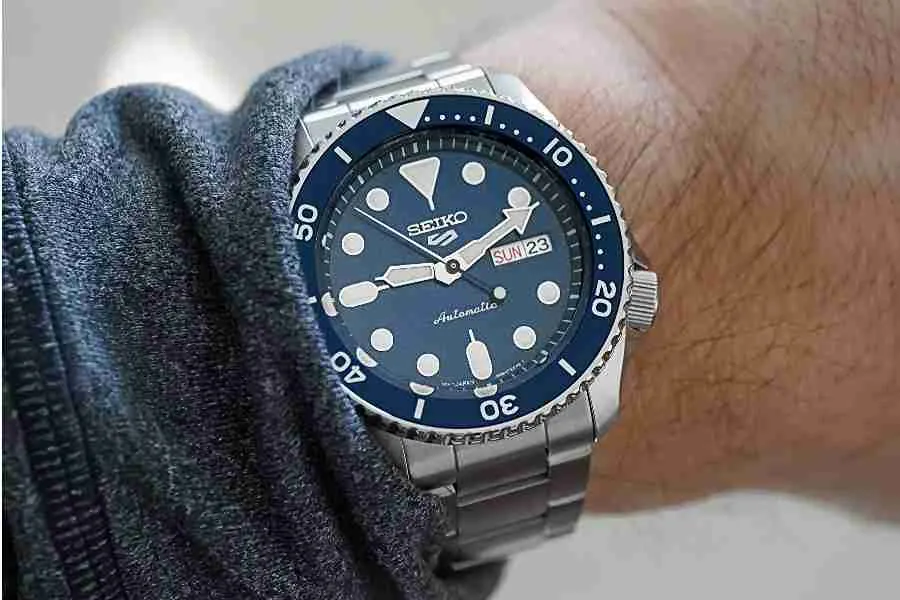
My Seiko 5 automatic watch
When this is enough:
- The watch runs but may be off by up to ~20 seconds/day.
- There’s no moisture, and it doesn’t stop.
If your watch needs more than a tune-up, here’s the next level.
Full Watch Repair Service ($300–$500)
What it covers:
- Complete movement disassembly
- Ultrasonic cleaning of parts
- New gaskets and seals
- Proper lubrication (oils)
- Reassembly and regulation
Definition: Movement = the engine of the watch; all the tiny parts that keep time.
Brand example: A Tissot might be about $300 on Tissotwatches; a mid-range Omega often runs $500+. Same work, different price tags.
Timing: Most automatic watches need this every 3–5 years (typical estimate) with regular wear.
Money tip: Ask for an itemized quote so you know what you’re paying for. Now imagine significant damage — that’s when costs really jump.
Complete Overhaul of Automatic Watches($500–$1,000+)
What it covers:
- Movement rebuild or major repair
- Case and crystal refinishing
- Water-damage repair
- Parts replacement (sometimes rare parts)
Definition: Overhaul = a complete rebuild plus any needed restorations.
Personal note: My dad’s vintage Omega needed water damage repairs and cost approximately $1,200. Painful, but once fixed, it ran beautifully and felt worth it.
Bright tip: Replacing the entire movement sometimes costs less than rebuilding a badly damaged one.
Price can change a lot if parts are rare or discontinued. If the manufacturer won’t service an out‑of‑warranty piece, shops must hunt for old-stock parts, used donor parts, or compatible aftermarket parts — that adds both cost and wait time.
Parts can take weeks or months to source and may tack on hundreds (or more) to the final bill. Independent repairs often lower cost but can void manufacturer warranties — get this in writing.
Comparison: Entry-level brands usually stay lower; luxury and vintage pieces can exceed $1,000(typical estimate).
Why Is Automatic Watch Servicing So Expensive?
Understanding why helps you accept the cost and avoid unnecessary bills. Ask the watch repair shop for a detailed quote.
The complexity inside Automatic watches
Think about this: many automatic movements have 150+ parts in a space smaller than an Oreo cookie. Parts move with tolerances measured in hundredths of millimeters. A dust particle or a drop of water can stop everything.
Definition: Automatic watch = a wristwatch that winds itself using the motion of your wrist (no battery).
Benefit: When you see how precise it is, you’ll understand why careful service matters.
Specialized skills and tools
Watchmakers train for years. Many complete typically 2–4 years of schooling (WOSTEP diploma, AWCI-certified courses). Including the timing machines, pressure testers, and ultrasonic cleaners, the tools are expensive. A proper bench setup easily tops $10,000 (typical estimate).
Fair comparison: The hourly rate is similar to that of a car mechanic, but here the work is microscopic and needs steady hands and deep knowledge. So, when should you bring your watch in? Let’s time it right.
How Often Should You Really Service an Automatic Watch?
Service at the right time. Please don’t do it too often. Don’t wait until damage shows up.
The Smart Service Schedule for Your Automatic Watches
General rule: 3–5 years for most automatic watches. Some brands suggest around 5 years.
Simple math: A $500 service every 3 years = $167/year. Stretch to 5 years and you save $200 per service — roughly a 40% cut.
With a clear comparison: $500 every 3 years ≈ $167/yr; $500 every 5 years = $100/yr — stretching interval saves ≈ $67/yr (40% lower annual cost).
Seeing it that way helped me stop panicking. Follow the recommended schedule to save money and keep your watch in top shape.
Signs you can wait:
- Keeps time within ~20 seconds/day
- No moisture or fog under the crystal
- Power reserve close to spec
Money-saver: Rotate 2–3 watches. Each gets less runtime, reducing wear and tear, so you can safely stretch service intervals and cut costs.
What affects Your Watch Service Schedule?
Speeds service up:
- Daily heavy wear
- Sports, shocks, drops
- Water exposure
Let’s wait longer:
- Gentle use and proper storage
- Using a watch winder so that lubricants don’t settle
Quick test: Losing under 20 seconds/day? You can wait a bit longer.
How to Cut Automatic Watch Service Costs by 40%?
Small habits add up. I ignored them once and ended up paying more later. Please don’t make my mistake.
Daily Habits to Extend the Life of Your Watch
- Crown care: always push the crown fully in. Please don’t force it.
- Keep away from magnets: phones, speakers, and laptops can magnetize a watch — try to keep about 6 inches(magnet distance) apart.
- Weekly cleaning: wipe the case and bracelet with a microfiber cloth to remove sweat and grime.
Real savings: These steps can add 1–2 years between services.
Smart Storage With Watch Winders
If you own several automatic watches, a good watch winder keeps the automatic watch movement turning and spreads lubricants evenly.
I tested a practical option, the Mozsly watch winder (personal purchase), which performed well. It’s a budget-friendly option with multiple rotation settings and a quiet motor.
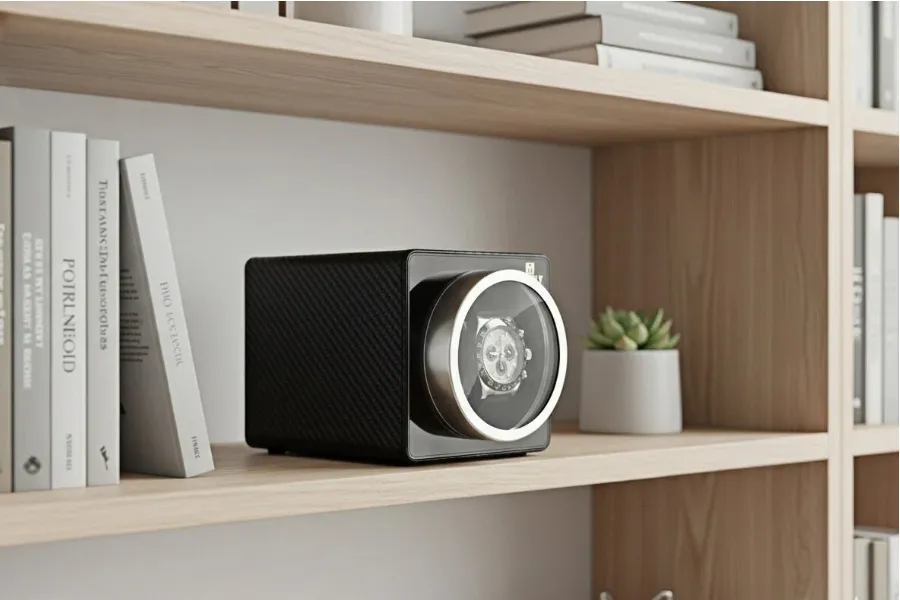
mozsly watch winder
It’s not glamorous, but they do what they should: keep automatic watches ready to wear. No sales fluff — just a helpful tool when convenience matters.
Cost perspective: An $89 watch winder vs. a $500 service caused by poor storage — the math is easy.
Watch winder tip: Many watches do fine around 650–900 turns per day, but check your manual.
Alternative: No watch winder? Store the watch crown-up in a cool, stable place.
Automatic watch Warning Signs: Service Now vs Wait
Don’t panic. But don’t ignore real problems.
Must-Service Red Flags
- Moisture or condensation under the crystal — get service within 48 hours.
- Watch stops completely — could be a broken mainspring.
- Losing 30+ seconds/day — usually a serious internal issue.
Action: Find a watch repair shop or watch repair service before you need one. Search for “watch repair shop near me” or “wrist watch repair near me,” and call to ask about experience and turnaround time.
Normal Wear You Can Ignore
- 10–20 seconds fast/slow is often normal.
- Surface scratches are cosmetic.
- A slight drop in power reserve over the years is expected.
Personal reassurance: I once went 7 years between services on a casual watch. It kept working because I treated it gently and kept it away from water.
Choosing a Watch Repair Shop
Where you send your watch matters.
Independent vs Authorized Dealers
- Cost: Independents often charge ~30–40% less.
- Warranty: Authorized service preserves factory warranty; independent work may void it.
- Reality: Some authorized centers outsource the same independent watchmakers.
When parts are rare or the manufacturer refuses to service an out‑of‑warranty watch, costs and wait times change.
Authorized centers may be limited to official parts and timelines, while independents might find used parts or aftermarket alternatives faster, sometimes cheaper, sometimes riskier.
Know the trade-offs before you decide. Independent repairs often lower cost but can void manufacturer warranties, get this in writing.
Questions to Ask a Watch Repair Shop
- Do you have experience with my brand?
- Is there a warranty on the service?
- Can I get an itemized quote and an estimated timeline?
Finding a Trustworthy Watch Repair Shop
Look for:
- Certifications (AWCI, WOSTEP)
- Verified reviews and before/after photos
- Transparent pricing and a written warranty
Red flags:
- No warranty
- Won’t show workspace or provide references
- Prices that seem too low
Tip: Photograph your watch before sending it in. It saves headaches.
Resources: Local watch clubs, the r/watches subreddit, and WatchUSeek forums can help you find good techs.
Your Automatic Watch 40% Savings Action Plan
Do these five things, and you’ll cut costs and stress.
Step 1: Calculate baseline
- Service cost ÷ years between services = monthly cost.
Step 2: Start a daily care routine
- Crown care, wipe weekly, avoid magnets. Expect 1–2 extra years between services.
Step 3: Invest in proper storage/winder
- A Mozsly watch winder or similar can add another year.
Step 4: Find a trusted independent watchmaker
- You can often save 30–40% versus brand centers.
Step 5: Create a service fund
-
$10/month removes surprises.
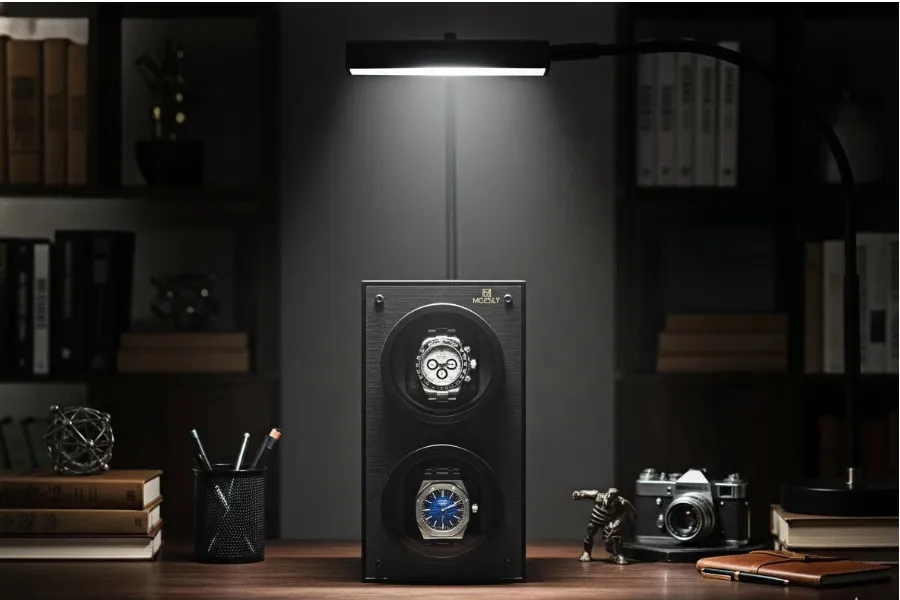
mozsly watch winder
Bonus: Keep a short maintenance checklist and log dates and costs. It helps when you call a watch repair store.
Expensive? Yes. But now you’re in control.
You came here because a service bill scared you. You want precise numbers, simple rules, and ways to avoid surprises.
Remember the pain point: surprise repair bills and not knowing when to send your automatic watch in for service. You don’t have to guess anymore.
Your Knowledge List:
-
-
-
-
- Real cost ranges for basic, complete, and overhaul services.
- Why does servicing cost so much (costly tools, tiny parts, trained watchmakers)?
- When to service and when it’s OK to wait.
- Practical steps to save about 40%: better daily care, smart storage, and choosing a trusted independent person.
-
-
-
Next step (easy):
Pick one small thing to do today. Take your watch pictures. Start a $10/month fund. Or search “watch repair shop near me” and call for an itemized quote.
If you want, I’ll make a printable maintenance checklist and a short phone script you can use when you call a watch repair store. Just say the word.
Protect your watch. Save your money. You’ve got this. Share this article if it helped — someone else will thank you (and your wallet will too).
Want that checklist and phone script? Please call me, I’ll put them together next.
Related Post's
Featured Video

Provide an email subscription feature for users to sign up for updates.
Follow the world of watches and cigars for exclusive content!
By subscribing to our newsletter, you will be the first to receive notifications of our latest articles, popular posts and special events.


