
Share This Post
You reach for your favorite automatic watch and find it silent. The hands have stopped, and the date is wrong again. Maybe your GMT hand is off, or your moonphase is days behind.
In that moment, a watch winder can feel like the missing piece in your watch collection — but it might also be one more gadget you don’t really need.

your GMT
This guide walks you through:
- When a watch winder makes sense,
- How an automatic watch winder affects your watch movement and service costs,
- And how to choose or skip one based on your own habits.
If you are completely new to winders and want a simple “first look, you can read What Is a Watch Winder alongside this guide.
How to Decide If You Need a Watch Winder?
Before you look at features or prices, it helps to answer one basic question: *Do you really need a watch winder for automatic watches*, or will simple hand‑winding be enough? This part focuses on your real life, not just on theory.
What This Automatic Watch Winder Guide Will Help You Decide?
By the end of this guide, you should be able to decide clearly whether a watch winder fits into your watch life. You’ll be able to judge three things.
- If it actually solves your day‑to‑day problems
Do you often find dead watches, dates out of sync, or complications that are a pain to reset?
- If it makes sense for movement health and maintenance
Does keeping your watch running on a gentle program help it, or is it just extra running time?
If you want a step‑by‑step decision checklist, you can also read Do You Really Need a Watch Winder .
- If it’s a good use of your budget for your collection size
Would your money be better spent on a service, a strap, or another watch — or does a winder really earn its place for how many automatic watches you own?

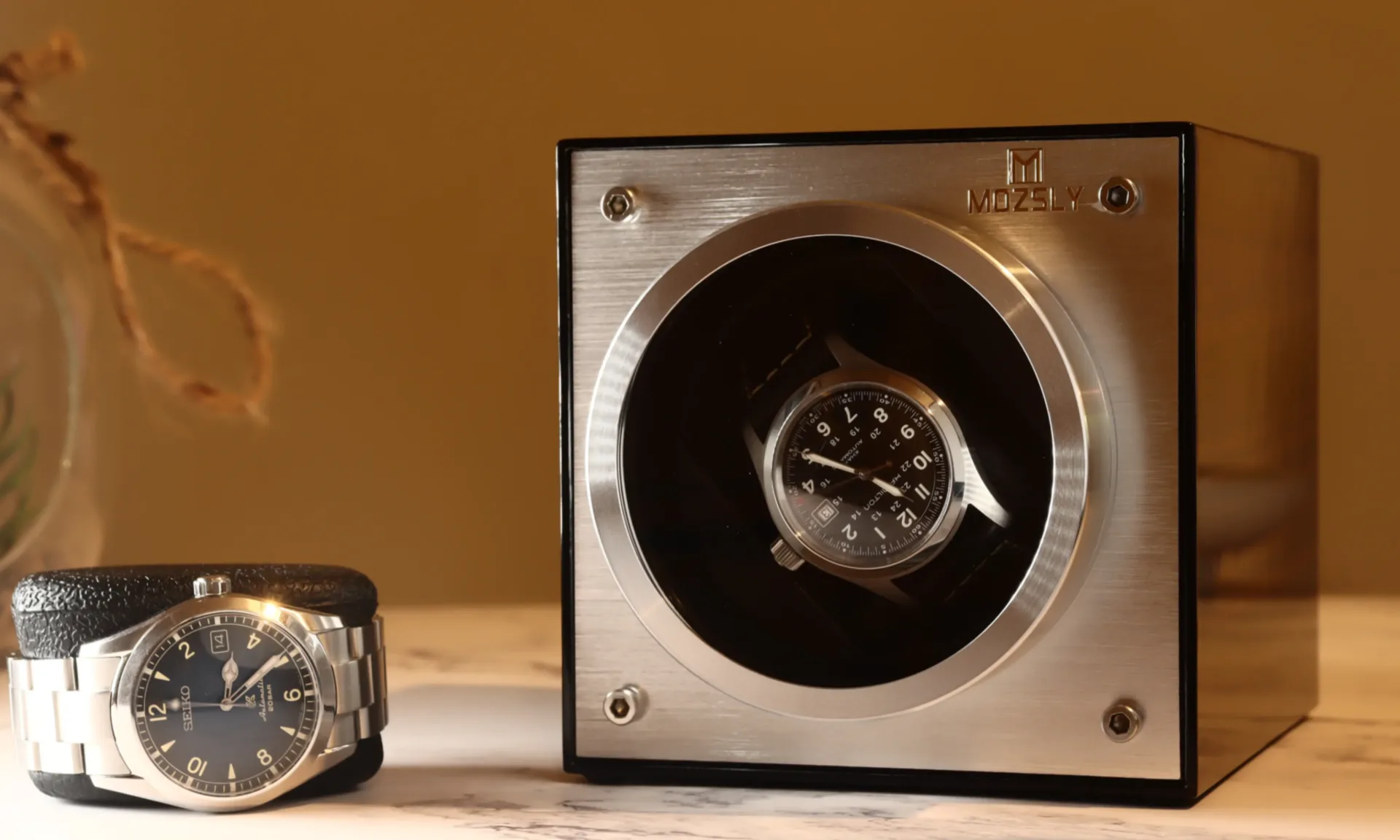
Mozsly watch winder
Who Gets the Most Value and Really Needs a Watch Winder?
Some people get a lot of value from a watch winder because it fits how they live and wear their watches. You may benefit more if you are in one of these groups.
- Multi‑watch collector or enthusiast
You own several automatic watches and like to rotate them. Some sit for days or weeks and are often stopped when you pick them up. You want them ready to wear and stored neatly. A winder keeps a few favorites always set and running.
- Busy professional who switches watches often
Your week might include a dress watch for the office, a sports watch for the gym, and something casual for weekends. You don’t wear each one every day, but you want any of them ready without rushing to reset the time and date right before you leave the house.
- Frequent traveler with GMT or dual‑time watches
You travel often and may leave some watches at home in a safe or drawer. You may own GMT or world‑time watches set to fixed zones. Keeping them on a winder means that when you get back, you can put them on and go with only small time‑zone tweaks.
- Owner of complex calendar or moonphase watches
You have annual calendars, perpetual calendars, moonphases, or other delicate complications. Resetting these after they stop is slow and easy to get wrong. A winder can keep them moving, so you adjust them less often.
- Someone who enjoys the ritual and display
You like choosing a watch before a meeting or an evening out. Seeing your watches quietly turning, already on time and in date, is part of that ritual. A winder serves both as a display and a convenience tool.
If several of these sound like you, you are much closer to truly needing a watch winder.
When You Probably Don’t Need a Watch Winder at All?
On the other hand, many watch owners will find that a winder adds little or no real benefit. You may not need one if:
- You wear an automatic watch almost every day
Daily wear usually keeps it fully wound, so a winder adds little real benefit.
- You enjoy manual winding and setting the time.
If turning the crown and resetting your watch is part of the pleasure, a winder may take that away.
- Your budget is tight, or you’d rather spend on service or another watch.
Regular maintenance and healthy movement matter more than a winder. If you are unsure whether a winder is a smart use of your budget, the article Are Watch Winders Worth the Investment looks at this in detail.
- You are very sensitive to noise, or live in a very quiet space.
Even “quiet watch winders” make a small sound. If any nighttime noise bothers you, letting the watch stop may be simpler.
- Most of your watches are quartz or hand‑wound
Quartz watches don’t need a winder, and pure manual‑wind watches are designed to be wound by hand, not by a rotor.
If you recognize yourself more in this list, it’s fine to skip a winder for now and enjoy your watches the way you already do.
Summary – Deciding if you need a winder
- Count how many automatic watches you rotate and how often they stop.
- Notice whether resetting the time and date feels annoying or enjoyable.
- If the hassle bothers you, the next section shows what everyday problems a watch winder can actually solve.
Common Problems Solved with a Watch Winder
Once you know roughly whether you might need a watch winder, it helps to see the concrete problems it solves in daily life.
No More Stopped or Frozen Automatic Watches or Wrong Dates
If you’ve ever opened a drawer, picked up a beautiful automatic, and found it completely dead, you know how frustrating it feels. Right when you want to leave, you are stuck winding the watch, setting the time, and fixing the date.
A watch winder keeps your automatic moving when you’re not wearing it, so it’s ready when you are. This helps you avoid:
- Last‑minute resets
Less fiddling with the crown to fix time, date, or day as you’re heading out.
- Rushed, error‑prone setting
Fewer mistakes, like setting the date in the danger zone or skipping a day by accident.
- Late starts and wasted minutes
No extra five or ten minutes lost because your watch stopped overnight.
If you are also wondering whether solving these problems with a winder is safe for your watches, Are Watch Winders Safe covers the main safety concerns.
Using More of the Automatic Watches You Already Own
A winder can help you enjoy the watches you already have, instead of leaving half of them stopped in a box. If you own a few automatic watches and only wear each one now and then, the hassle of resetting them can quietly push you to reach for the same watch again and again.
With a winder:
- rotating becomes easier,
- You are more likely to switch between a dress watch, a sporty piece, and a casual watch,
- And you do not feel that each change comes with the chore of winding and setting.
Ideal Daily Users for an Automatic Watch Winder
You’re more likely to see daily benefits from an automatic watch winder if:
- You switch between 2–4 automatic watches most weeks.
- You own watches with date, GMT hand, or moonphase displays that you don’t like resetting.
- You often find at least one watch stopped when you go to wear it.
- You are busy in the mornings and just want to grab a watch and go.
If this matches your routine, How to Choose the Right Watch Winder explains how to match features, capacity, and budget to your collection.
Summary – Everyday problems
- A watch winder reduces last‑minute resets and makes it easier to rotate more of your watches.
- If you rarely switch watches or enjoy winding and setting them, the gain is small.
- Next, it helps to look at what constant or frequent running does to the movement itself.
Mechanical Benefits for Your Watch Movement
Convenience is one side of the story. The other big question is what a watch winder does to the movement itself.
Healthier Lubrication and Less Wear with Gentle Automatic Watch Winding
Inside every mechanical watch are tiny gears and pivots coated with a thin layer of oil. That oil can slowly dry or settle if a watch sits completely still for long periods.
Light, regular motion from gentle automatic watch winding helps keep lubricant spread where it should be, instead of letting it clump or pull away.
Good practice includes:
- Staying within the recommended TPD (turns per day)
Use settings close to what your watch brand suggests — enough to stay wound, not so much that it is always at maximum tension.
- Including rest periods
Good watch winders run in cycles, letting the movement rest between rotations instead of turning all day without a break.
- Avoiding extreme programs
Very high TPD or nonstop rotation adds unnecessary wear to the winding system without extra benefit.
A dormant watch has no running wear, but its oils still age over time. A gently used watch spreads those oils better, while adding only modest extra wear when set sensibly.
Protecting Delicate Watch Complications Like GMT and Moonphase
Complex functions often suffer more from frequent hand‑setting than from steady running. Every time you pull the crown, change the date, or jump a second time zone, you engage small levers and gears. If you do this at the wrong hour, you can damage parts.
A well‑set watch winder can keep these complications on track, so you adjust them less often. This is especially helpful for:
- annual or perpetual calendars,
- moonphase displays,
- GMT or dual‑time functions.
By reducing how often you need to do big manual corrections, a winder can indirectly protect these delicate systems from mistakes and rough handling.
Service Intervals, Running Hours, and Long‑Term Costs
A watch winder does not remove the need for regular service. Oils still age, seals still harden, and parts still wear as the watch runs.
What a winder can do is make that wear more even and predictable, instead of long storage followed by heavy, concentrated use when you finally pick the watch up.
Some watchmakers feel that gentle, regular running helps a movement stay stable between services. Others point out that more running hours still mean more wear. There is no full consensus, so personal preference and convenience matter.
If you’re weighing these long‑term costs against the price of a winder, Are Watch Winders Worth the Investment gives a more detailed cost comparison.
Summary – Movement and maintenance
- Use a watch winder to give moderate motion within the recommended TPD range, not constant spinning.
- For complex calendars, moonphase, and GMT watches, the main benefit is fewer risky manual resets.
- Even with a winder, plan regular servicing; if you worry about running hours, keep only your most‑used pieces on the winder.
How a Watch Winder Works and How to Set It Up?
Understanding how a watch winder works makes it easier to use it safely and get the most benefit from it.
What Is a Watch Winder and What Does a Watch Winder Do?
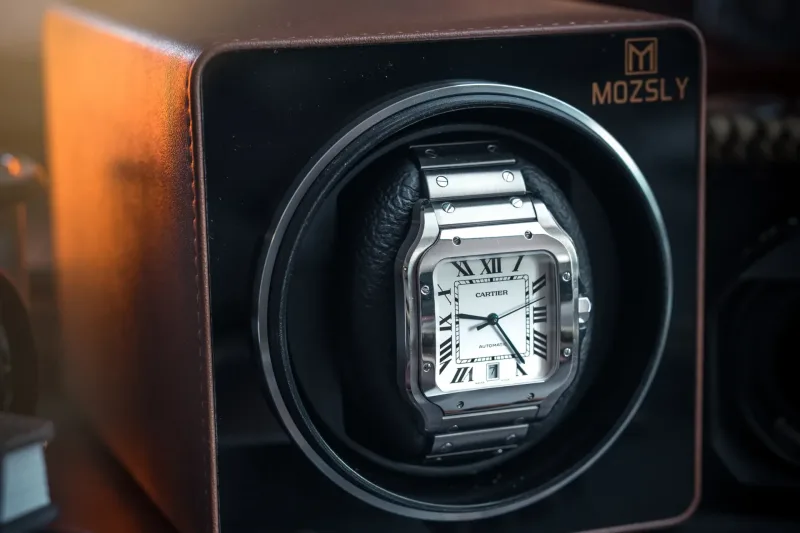
A watch winder is a small motorized box that gently turns your automatic watch to keep its mainspring wound.
In simple words:
- It slowly turns an automatic watch on and off to mimic the motion it feels on your wrist.
- It keeps the power reserve topped up, so the watch does not stop when you are not wearing it.
- It is mainly useful for automatic watches, not for quartz or pure manual‑wind watches.
What a watch winder does not do:
- It does not, by itself, make a watch more accurate.
- It does not replace watch servicing.
- It will not fix a watch that already has mechanical problems.
If you’d like a beginner‑level introduction with diagrams and more background, What Is a Watch Winder is a good place to start.
How to Use a Watch Winder and How to Wind an Automatic Watch?
Many people search “how to wind an automatic watch” or “do you have to wind automatic watches. The basics are simple.
- An automatic watch winds itself when you move.
- You can also wind many automatic watches by hand with the crown.
- A watch winder is just another safe way to keep it wound when you’re not wearing it.
Basic steps to use a watch winder:
- Check your watch
Make sure it is working well and has been serviced in a reasonable time. A winder won’t fix old, sticky oil.
- Mount the watch
Put the watch on the holder or cuff. Make sure it is snug, not loose.
- Choose a program
Set a TPD and direction that fit your movement.
- Place the winder
Put it somewhere stable, away from strong magnets, and where light noise is okay.
- Test for a few days
Check if the time and date stay correct. If the watch is losing power, you may need a slightly higher TPD.
Automatic Watch Winder Settings and Recommended TPD by Brand
“Automatic watch winder settings” and “Seiko 5 watch winder settings” are common searches because there is no single setting that works for every watch.
Each movement has its own ideal TPD and winding direction. The table below shows some typical examples:
|
Brand / movement (examples)
|
Typical TPD range
|
Common winding direction
|
|---|---|---|
|
Rolex (many modern)
|
~650–800
|
Often bi‑directional or clockwise
|
|
Omega (many co‑axial)
|
~650–900
|
Often bi‑directional
|
|
Seiko 4R / 6R series
|
~650–800
|
Many are bi‑directional
|
General tips:
- If you cannot find exact data, start around 650–800 TPD and bi‑directional.
- If your watch stays fully wound and keeps time well at a slightly lower TPD, that is better than pushing the upper limit.
- Avoid “one universal setting” for very different watches.
Summary – How it works and setup
- Learn how your watch winder controls TPD, direction, and run–rest cycles.
- Start with moderate TPD and bi‑directional rotation, then adjust as your watch behaves.
- Once you understand the setup, it is easier to assess potential risks and downsides calmly.
Risks, Downsides, and Common Watch Winder Myths
Some watch owners love winders. Others are sure that “watch winders are bad for watches. The truth usually lies between these two views.
Can a Watch Winder Damage or Overwind a Watch?
Most modern automatic watches cannot be “overwound” in the classic sense when used on a proper winder. Their mainsprings have a slip‑clutch that allows the spring to slide when fully wound.
Real risk appears when:
- Winders have no TPD control and spin almost constantly.
- Very high TPD settings are unnecessary and keep the rotor and winding gears always engaged.
Practical precautions:
- Choose a winder with adjustable TPD and direction.
- Stay within the recommended TPD range for your movement, not at the maximum.
Do Winders Wear Out Movements Faster?
In theory, if a watch runs for more hours per day, its moving parts experience more total wear over the same number of years. A watch that sits stopped half the week logs fewer running hours than one kept wound every day.
On the other hand:
- Watches are built to run, not to sit forever.
- With reasonable TPD and rest cycles, the extra wear is usually small and may be worth it if you value convenience.
If you like your watch to be ready at all times, you accept a bit more running time in exchange for ease of use. If you want to minimize hours of movement above all else, you may prefer to let some watches stop and only wind them when you wear them.
Are Watch Winders Bad for Watches or Really Necessary?
Many questions boil down to two ideas:
- “Are watch winders bad for watches?”
- “Do all automatic watches need a watch winder?”
The balanced answer is:
- A well‑made winder, used with good settings, is usually safe for modern automatic watches.
- A cheap, poorly controlled winder, used on extreme settings, can cause unnecessary wear.
- Watch winders are *optional tools*, not essential gear for every owner.
For a longer myth‑busting discussion with more examples, you can read Are Watch Winders Safe side by side with this section.
Summary – Risks and limits
- A well‑set watch winder is unlikely to damage a modern automatic, but poorly set settings can cause unnecessary wear.
- More running hours always mean some extra wear, so it is a trade‑off against convenience.
- If you dislike that trade‑off, you can safely skip a winder; if you accept it, the next step is choosing the right one.
How to Choose the Right Automatic Watch Winder?
If you decide you want a winder, the next question is how to pick one that matches your watches and habits.
Features That Actually Matter in a Winder
Not every detail on a product page is worth worrying about. Features that truly affect day‑to‑day use and safety include:
- Adjustable TPD (turns‑per‑day) – to match different movements.
- Direction control (CW / CCW / bi‑directional) – to suit various calibres.
- Programmable rest cycles – to avoid constant spinning.
- Quiet motors – important for bedrooms and offices.
- Flexible watch cushions / holders – to fit both small and large wrists.
- Stable build and cover – to reduce vibration, dust, and accidental knocks.
- Power options (AC / battery) – useful for safes, cabinets, or travel.
If a winder has these basics, it is usually a “good watch winder” for most users.
Single vs Multi Watch Winder for Automatic Watches
Your collection size is one of the easiest starting points. A perfect single watch winder for someone with one daily watch can be annoying for a collector with eight automatics.
|
Number of automatic watches
|
Suggested winder type
|
|---|---|
| 1 |
Single‑slot winder
|
|
2–3
|
Dual or triple winder
|
|
4 or more
|
Multi‑watch winder or several units
|
Also, think a step ahead:
- If you plan to grow your collection soon, a slightly larger winder may be cheaper in the long run.
- If you keep your collection small and focused, a compact unit may be more practical and easier to place.
Budget Levels, Best Automatic Watch Winder, and What You Get
Watch winders range from very cheap to very expensive. Searches like “best budget watch winder, “high-end watch winder,” and “luxury watch winder” show that people want to know what each level really buys.
You can think in broad tiers:
|
Level
|
Typical characteristics
|
|---|---|
|
Entry‑level
|
Basic build, simple designs, limited TPD and direction, more motor noise.
|
|
Mid‑range
|
Quieter motors, better TPD/direction control and programs, sturdier materials and nicer looks, often the sweet spot for most people.
|
|
High‑end
|
Very quiet, long‑life motors, refined cases, display‑oriented, display lighting, and fine wood or leather, often sold as part of luxury watch winders or watch winder safe systems.
|
When people ask for the “best automatic watch winder” or the “best watch winder for Rolex or Omega”, they usually care about:
- safe TPD and direction settings,
- quiet, smooth operation,
- And build quality that matches their watches.
If you are unsure how much to spend, Are Watch Winders Worth the Investment gives more guidance on balancing value against price. For a simple shopping checklist by collection size, look at How to Choose the Right Watch Winder.
Summary – Choosing a winder
- Decide which features matter most: usually adjustable TPD, direction, rest cycles, and low noise.
- Match capacity to the number of automatic watches you actually keep in rotation.
- Choose a budget level that makes sense for the value of your watches and how long you plan to use the winder.
FAQ – Quick Answers About Watch Winders
These short answers cover the questions people ask most about watch winders. For more depth, you can follow the internal links to the full guides mentioned above.
Can I Leave a Watch on a Winder All the Time?
You can leave a watch on a winder full‑time if it is set up correctly with sensible rest cycles. Modern automatics have slip‑clutches, so the mainspring is not harmed by being fully wound.
The main point to watch is total running hours. If you prefer to be cautious, you can:
- Use the winder only on days you are not wearing the watch, or
- Let some pieces stop between wears and wind them by hand when needed.
For more nuance, see Are Watch Winders Safe.
Are Vintage or Heirloom Watches Safe on a Watch Winder?
Vintage and heirloom watches can be more delicate, especially if they have not been serviced in a long time. Old oils, worn parts, or fragile components may not enjoy continuous motion, even at gentle TPD.
Before putting an older piece on a watch winder, it is wise to have a watchmaker check it and confirm it is in good running condition. Many collectors choose to wind and set their most precious vintage watches by hand only when they wear them.
Do All Automatic Watches Need a Watch Winder?
No, most automatic watches do not need a watch winder. A winder is about convenience, not survival. Your watch is designed to be:
- worn,
- hand‑wound if needed,
- And occasionally reset.
Winders become more useful as you add more automatics with dates, day‑dates, GMT, or other settings you dislike having to adjust. They are a lifestyle choice, not a requirement. If you want a focused, checklist‑style answer, read Do You Really Need a Watch Winder.

Mozsly watch winder
Do I Need a Watch Winder for My Rolex, Omega, or Breitling?
Questions like “Do you need a watch winder for a Rolex?” or “Do I need a watch winder for my Breitling?” are very common.
The honest answer:
- The movements in modern Rolex, Omega, and Breitling watches do not require a watch winder for health.
- A winder is only needed if you want them always ready, especially for models with date, GMT, or complex calendars.
- If you choose one, look up the recommended TPD and direction for your exact calibre and set your automatic watch winder accordingly.
Final rules to get the most from a winder
- Use a watch winder mainly for the watches you actually rotate, especially those with dates or complications.
- Avoid nonstop spinning; choose programs with clear rest periods and sensible TPD and direction.
- Keep vintage or overdue‑for‑service watches off the winder, and remember that no winder replaces regular service.
Conclusion and Next Step
A watch winder will not fix every problem, but it can ease some very real pain: dead automatic watches when you are in a hurry, wrong dates on busy mornings, and GMT or moonphase pieces that feel too complex to reset.
At the same time, many owners — especially those with just one daily watch or mostly quartz pieces — can skip a winder, focus on regular service, and lose nothing important.
Think about your own collection and routine:
- If you switch between several automatics and hate constant resetting, use this guide’s tips on TPD, direction, and features, then go to How to Choose the Right Watch Winder to pick a unit that truly fits you.
- If you are still unsure about safety or cost, click through to Are Watch Winders Safe and Are Watch Winders Worth the Investment before you buy anything.
Take one clear step now — either choose a watch winder with confidence, or decide you are better off without one. In both cases, your watches and your time will be better protected.
Related Post's
Featured Video

Provide an email subscription feature for users to sign up for updates.
Follow the world of watches and cigars for exclusive content!
By subscribing to our newsletter, you will be the first to receive notifications of our latest articles, popular posts and special events.


